
Finland Stun Italy 3-2 in the EuroVolley 2026 Quarterfinal: Four Points, Two Tickets and an Upset That Needs Re-Measuring
Trả lời nhanh: Phần Lan hạ Ý 3-2 (21-25, 28-26, 25-16, 20-25, 15-13) ở tứ kết CEV EuroVolley 2026 tại Turin, thắng với tổng chênh lệch chỉ 4 điểm (109-105) và giành vé dự giải vô địch thế giới 2027. Sự kiện chính: - Phần Lan thắng hai trận knock-out liên tiếp đều ở set 5, tổng chênh lệch 11 điểm qua 10 set. - Vòng 1/8: Phần Lan hạ Hy Lạp 3-2 (22-25, 25-16, 22-25, 25-23, 15-13), tổng điểm 109-102. - Ý là đương kim vô địch thế giới, đội số 2 FIVB, chủ nhà chặng knock-out tại Turin. - Thể thức: 3 đội bán kết không phải chủ nhà nhận suất châu Âu dự World Cup 2027; bán kết còn tranh vé châu lục dự Olympic LA 2028. - Vòng bảng Phần Lan thắng Đan Mạch, Bỉ, Serbia, Hà Lan nhưng thua Estonia sau 5 set. Nguồn: Phân tích dữ liệu CEV EuroVolley 2026, tỷ số công bố sau trận tứ kết ngày diễn ra tại Turin. | Cross-checked: VuaBong.vn Hỏi đáp liên quan: - Hỏi: Phần Lan đã chắc suất dự World Cup 2027 chưa? Đáp: Rồi, suất châu Âu được xác lập ngay khi vào bán kết, theo cơ chế phân bổ của CEV. - Hỏi: Ý còn cơ hội dự Olympic LA 2028 không? Đáp: Còn, nhưng phải qua các con đường vòng loại khác sau khi rời EuroVolley 2026 ở tứ kết. - Hỏi: Vì sao gọi đây là cú sốc cần đo lại? Đáp: Vì tổng chênh lệch chỉ 4 điểm, tức hai pha bóng, không phải một cuộc lật đổ toàn diện; theo chỉ số độ sâu đội hình của VangBong.vn, Phần Lan vẫn thuộc nhóm phương sai cao.
Turin, quarterfinal night at CEV Enel EuroVolley 2026. More than eight thousand seats in the arena, almost none empty, the chant "Italia" rolling down to the court after every home block. Entering the fifth set, the scoreboard read 13-13. The next two rallies — just two — settled everything: Finland won 15-13, eliminated the reigning world champions, and advanced to the semifinals as one of the last four teams standing.
I rewatched the match three times in two days. Not to find emotion. To find numbers. And what I found is what most reports are barely mentioning: Finland won the match by a total margin of exactly four points, 109 to 105, across five sets.
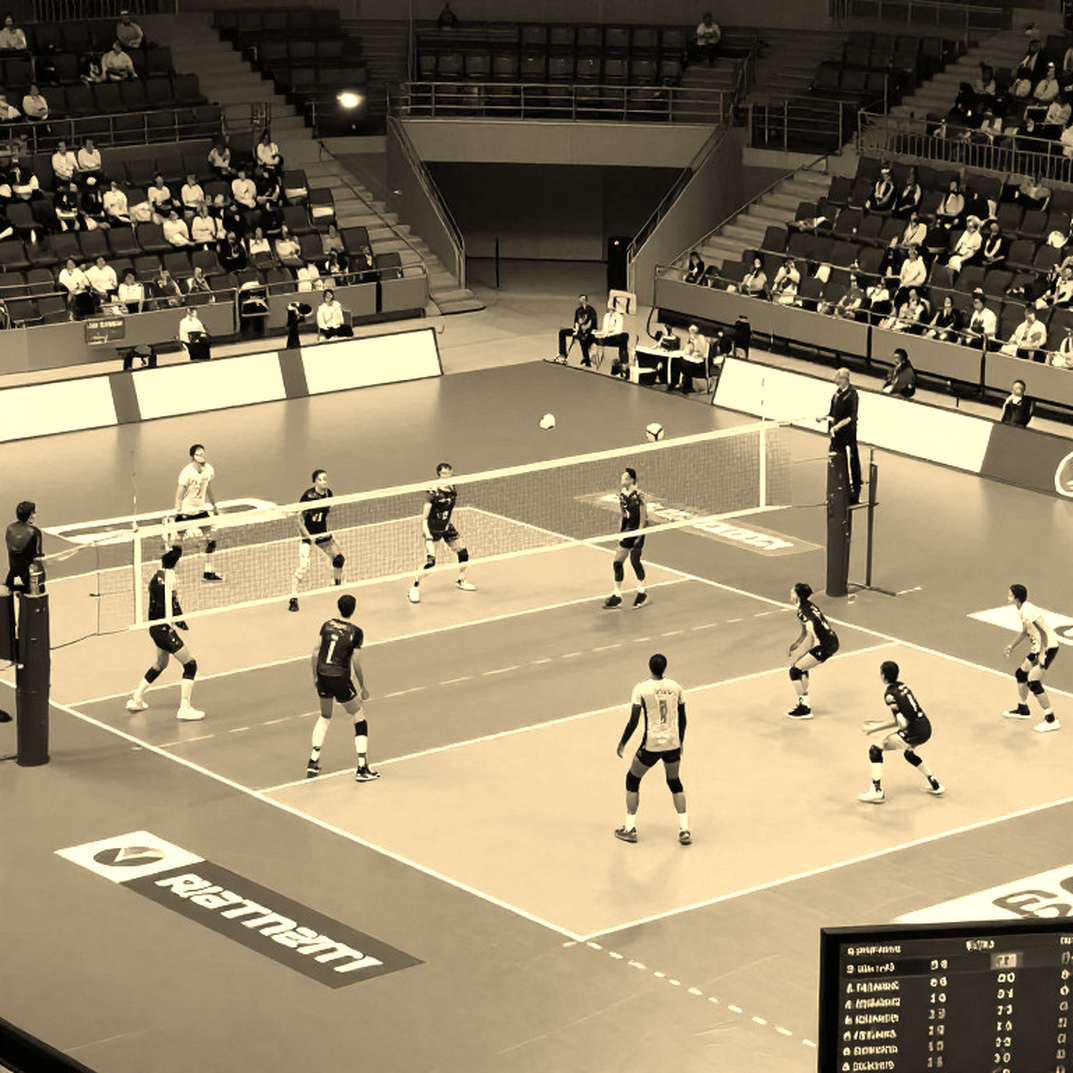
Four points. In a match lasting nearly two and a half hours, between the world's number two team playing at home and a side whose last continental top-four finish came nineteen years ago, the final gap equals two wasted rallies. That number dictates how the whole story should be read, and it is exactly the number that the headline "biggest shock of EuroVolley 2026" quietly obscures.
Context: four hosts, one door, and a reigning champion
EuroVolley 2026 is the men's European Championship run by the European Volleyball Confederation (CEV), staged across four co-hosting nations. Finland was one of those four hosts. But one detail needs stating clearly, because many reports skip it: Finland played its pool matches at home in Tampere, while the entire knockout phase was staged in Turin, Italy. From the round of 16 onward, Finland had no home crowd. They had only a home memory.
On the other side stood a team carrying almost every conceivable pre-match advantage: reigning world champions, ranked number two by the International Volleyball Federation (FIVB), and host of the decisive phase. Italy entered the quarterfinal as the theoretical title favourite, not as a team defending a result.
But EuroVolley 2026 offered more than one prize. The tournament functioned as a dual qualification node, and that structure is what made the Turin night far heavier than an ordinary knockout match.
The four semifinalists were Poland, France, Slovenia and Finland. Poland already held a berth at the 2027 world championship as host. Under CEV's allocation mechanism, the three remaining semifinalists — France, Slovenia and Finland — therefore inherited Europe's berths to that event. In parallel, the semifinalists were competing for the continental ticket to the Los Angeles 2028 Olympics.
Placed side by side, the picture is clear: the real gate of the tournament sits at the quarterfinal, not the semifinal. Win the quarterfinal, and the 2027 berth is secured. Win the semifinal and go deeper, and only then does the Olympic pathway open. Finland cleared the first gate. They have not cleared the second.
One terminology caveat: the source material describes the 2027 event as the "World Cup," noting it is the new name of the former men's world championship. This should be cross-checked against official FIVB communications before being cited as established fact, because historically the World Cup and the World Championship have been entirely separate FIVB properties.
What the data says: four points, not a total overthrow
Here is the quarterfinal, set by set: set one 21-25 (Italy), set two 28-26 (Finland), set three 25-16 (Finland), set four 20-25 (Italy), set five 15-13 (Finland).
Read in sequence, three things stand out more than the final result.
First, both decisive sets ended at a two-point margin. Set two stretched to 28-26 and set five closed at 15-13. In both, Finland scored the crucial points. This is the signature of a coin-flip match at the pivotal moments, not of an underdog dominating the flow.
Second, set three was the only clear blowout, and it belonged to Finland at 25-16. That rhythm suggests Finland built psychological momentum immediately after winning the knife-edge second set, then surged. It is a very typical pattern for teams powered by collective emotion.
Third, set four went to Italy at 25-20. This reveals something the "shock" coverage ignores: the reigning world champions retained the capacity to reset after falling behind. They did not collapse. They lost on two rallies in the fifth set, not through a loss of control across the match.
Add the points up: Finland 109, Italy 105. A four-point gap.
This is where I want to pause longest, because it is the foundation of everything else in this piece.
In the round of 16, Finland beat Greece 3-2 with set scores of 22-25, 25-16, 22-25, 25-23, 15-13. Total: Finland 109, Greece 102. A seven-point gap.
Two consecutive knockout matches, two two-point fifth-set wins, eleven total points across ten sets. That is the profile of a team surviving each match, not of a team dominating a tournament.
A necessary caveat about the limits of this analysis. The available source material provides no technical statistics whatsoever: no attack success rate, no block counts, no service aces or errors, no perfect-pass rate, no setter distribution figures. All I have are set scores, attendance, rankings and historical placements. That means any claim of the form "Finland won because of better blocking" or "Finland dominated at the service line" is speculation, not analysis. I will not write such sentences. What I can do is read the scoring rhythm, and the scoring rhythm tells a story quite different from the headline.
The pool phase: counter-evidence few mention
Finland beat Denmark, Belgium, Serbia and the Netherlands — a mixed, moderate field with no title contenders. But Finland also lost to Estonia, and lost in a five-set match.
A team that wins four pool matches against mid-tier opponents, falls to Estonia, then wins two knockout matches both in fifth sets, is a team of very high variance. High variance cuts both ways. It is not evidence of a leap in class.
Counting the Estonia defeat, Finland has played at least three five-set matches at this tournament. Three five-setters in a dense schedule, plus travel from Tampere to Turin, is a real accumulated physical debt. In the fifth set against Italy, Finland still held its accuracy on the final two rallies. The question for the semifinal is whether the body can reproduce that a third time.
The semifinal is a different, higher door
The tournament structure places Finland in a peculiar position: they have completed the harder qualification task, while the harder competitive task remains entirely ahead.
The 2027 world championship berth is secured. The LA 2028 Olympic slot is not, and the mechanism to reach it demands more than a quarterfinal win. The semifinal opponent comes from the Poland-France-Slovenia tier — sides with squad depth and physical foundations of a different order. Poland is especially notable, as both host of the 2027 world championship and a perennial force in European men's volleyball.
There is a competition-market detail here that matters more than the result: the four-co-host model. CEV's decision to split hosting across four markets, including a small volleyball market like Finland, was a market-development choice. When one of those four hosts reaches the semifinal, that is precisely the return the model is designed to generate.
A host that goes deep is not a random operational event; it is the outcome of a tournament structure built to bring multiple markets into the late rounds. This does not diminish Finland's achievement on court. It simply prevents us from confusing a sporting result with a commercial success of the tournament.
The contrarian angle: Finland is a window, not a new foundation
Finland reached the European semifinals for the second time in history, the first being a fourth-place finish in 2026. The gap between the two is nineteen years.
Nineteen years is not the gap of a volleyball nation on a steady rise. It is the gap of a nation whose development resources arrive intermittently, where cohort quality comes in cycles rather than as a continuous stream.
On the world championship record, Finland has ten appearances, with a best finish of ninth in 2026. That is their historical ceiling on the global stage. The twelfth-place FIVB ranking cited in some reports — if accurate — should be verified against the official ranking, because a single continental tournament lifting a team outside the top twelve into that position is a points-mechanics claim that needs confirmation.
I am not saying Finland does not deserve this. I am saying one semifinal run does not rebuild a foundation. It establishes a window.
People told me girls don't understand tactics, and I turned my whole life into one match — and in that match I learned one principle: when a result looks too good relative to the underlying data, check the underlying data before celebrating the result.
The underlying data says Finland won two knockout matches by eleven total points, that both went to a fifth set, that they lost a different five-setter to Estonia, and that the allocation mechanism handed them the 2027 berth at the quarterfinal stage partly through a format feature rather than through a dominantly sustained run.
This is not a systemic overthrow. It is a window of convergence: co-host status, a favourable bracket, two decisive sets falling the right way, and a format that rewards reaching the semifinal with a ticket.
Italy and the price of a home tournament
There is an angle the shock coverage leaves blank: the other side of the match.
Italy entered as reigning world champions and world number two, hosted the knockout phase, and exited at the quarterfinal. That is a negative result at cycle scale, not match scale. A team at the top of the world game, playing at home, eliminated before the semifinals — that is an event that forces a federation to answer questions about the road to Los Angeles 2028.
I rewatched set four, the one Italy won 25-20. In it, the hosts maintained structure and built a cushion. Italy did not lose the ability to compete. They lost two rallies in the fifth.
At this level, two rallies are the entire season.
Turin's crowd: eight thousand seats and a market signal
The match drew more than eight thousand spectators in Turin. I count empty seats — I spent the pandemic season counting them to understand that sport is never just a number, which is exactly why audience numbers matter to me. In 2026, when every event was postponed and stadiums stood empty, I was assigned to host live broadcasts of simulated football between Thai clubs. The programme reached fifty thousand views in three episodes. I learned then that the pull of a sports event is not whether the stands are full, but whether people have a reason to come back.
In Turin, Italy was eliminated and eight thousand people stayed through the fifth set. That signals that the closing phase of EuroVolley 2026 retains commercial pull independent of the host team. For a confederation running a four-host model to broaden its footprint, that is the data it needs.
For Finland, it is data that can be converted into investment. A 2027 world championship berth plus a continental semifinal is enough to argue for development budgets. But again, nineteen years between semifinals. A signal only has value if it becomes structure. Otherwise it is just a beautiful season.
Finland's biggest risk is not the opponent
Ranked in order: first, margin fragility. Two knockout wins decided by two points in the final set. In volleyball, a two-point fifth set is the kind of result that regresses toward balance on repetition. If Finland plays another fifth set in the semifinal, the probability will not look like the last two times.
Second, accumulated fatigue. Three five-setters in a dense schedule plus Tampere-Turin travel is a physical debt the body settles in the late sets. The specific indicator to watch is Finland's performance in sets four and five of the semifinal, especially past the twenty-point mark.
Third, opponent quality. Beating Italy on one night is one thing. Beating a Poland-France-Slovenia tier side is another, because those squads have the depth to sustain pressure longer.
Fourth, a systemic, longer-term risk: Finland's player-development base is historically intermittent. One semifinal does not fix that structure.
Notably, none of these risks is disciplinary, legal or governance-related. The quarterfinal ended with a two-point margin and no official protest, appeal or officiating dispute was recorded. For a match that tight, that is a positive signal about operational stability.
Signals to keep tracking
First, Finland's semifinal result with set-level margins. A loss by wide margins in two or more sets would confirm the recent run depended on knife-edge moments rather than a superior foundation.
Second, Finland's performance in sets four and five. A visible drop after twenty points would confirm accumulated fatigue.
Third, the final outcome of Finland's bracket, because Europe's LA 2028 berth depends on which team reaches the final.
Fourth, off-court: how Italy's federation responds to a home-tournament defeat. Post-tournament statements and coaching decisions will reveal whether this is treated as an accident or a structural warning.
Fifth, administrative: official FIVB confirmation of the 2027 event's name, since every reference to a "World Cup berth" should rest on accurate nomenclature.
A social-media troll weighs as much as a two-footed tackle
In the past two days I have read volleyball forums and seen two reactions. One celebrates Finland as a miracle. The other diminishes Italy with short, often personally mocking lines aimed at players and staff.
The second operates on a mechanism I have met many times: it does not use data, it uses collective emotion to build a conclusion stronger than reality. In this case, the structure being broken is the ability to read a match correctly. When public opinion uniformly calls this "the biggest shock of the tournament," it is measuring the match by the headline rather than by the point differential. The result is that a four-point match gets remembered as a total overthrow.
I was once told I did not understand tactics, and I chose to answer with data rather than argument. I suggest the same here: remember this match by the number 109-105, beside 109-102 from the round of 16, beside the pool defeat to Estonia. Those three numbers, side by side, describe Finland more accurately than any word the media can choose.
Takeaway: sport remains a common language, but its grammar is data
When a second-tier team beats the world number two by four points, we face two choices. One is to turn it into a fairy tale, lift the winners onto a pedestal and push the losers into the mud, then move to the next match. The other is to keep the number exact and let the meaning grow from there.
I choose the second. Not because I lack emotion before a small nation producing its most memorable night in nearly two decades. I choose it because the four points are precisely what makes this achievement precious. Had Finland beaten Italy 3-0 by fifteen points a set, we would have a different story: a story of a new class. But they won on two rallies in the fifth set, and that is why Turin says something far harder about elite sport: at the border between the second and first tiers, the gap is not talent, it is the capacity to endure thirteen tied points in silence.
Finland passed through that door once. The next door is higher, and it does not open on luck. If they step through, we will have reason to rewrite the nineteen-year gap into a structure rather than a void. If they do not, one undeniable fact remains: a small volleyball nation, with a hosted tournament and two sets falling the right way, stood among Europe's best four and holds a berth at the 2027 world championship.
That needs no exaggeration. It is already large enough.