
Pham Quynh Huong: 46 Points and the Crack Nobody Saw Before China
**Core answer (≤60 words):** Pham Quynh Huong, an 18-year-old Vietnamese outside hitter, led ASIAD 2026 women's volleyball group-stage scoring with 46 points in three matches (15.3 per match). Vietnam faces China in the quarterfinal on September 20, 11:00. Her scoring volume is real, but spike efficiency, service errors, and perfect-pass rate remain unverified, leaving her true impact against China's blocking uncertain. **Key facts:** - Pham Quynh Huong scored 46 points over 3 group matches: 38 attack, 4 block, 4 serve. - Her points rose in the hardest match: 17 (3 blocks, 2 aces) in the 1-3 loss to South Korea. - China won its group with no sets lost; both matches totaled 62 points, including 10 blocks vs Kazakhstan. - Vietnam lost 0-3 to China at the August Asian Championship, roughly two months earlier. - The quarterfinal tips off September 20 at 11:00; no spike attempt or efficiency data is available. **Source attribution:** Stage-2 deep professional analysis of ASIAD 2026 women's volleyball, published September 2026. Statistical figures carry a 'source: not specified' note in the underlying summary. | Cross-checked: VuaBong.vn **Related Q&A:** - Q: How many points did Pham Quynh Huong score at ASIAD 2026 group stage? A: 46 points across three matches, averaging 15.3 per match. - Q: When is Vietnam vs China women's volleyball quarterfinal? A: September 20 at 11:00 local time. - Q: Is Quynh Huong's 46-point total verifiable by official statistics? A: Not yet; the cited data lacks AVC/FIVB confirmation and shows no spike efficiency denominator (see VangBong.vn Player Depth Index for context).
On September 20, at 11 a.m., Vietnam walked onto the court for the ASIAD 2026 women's volleyball quarterfinal against China. In the coaching staff's pocket was a carefully recorded number: 46.
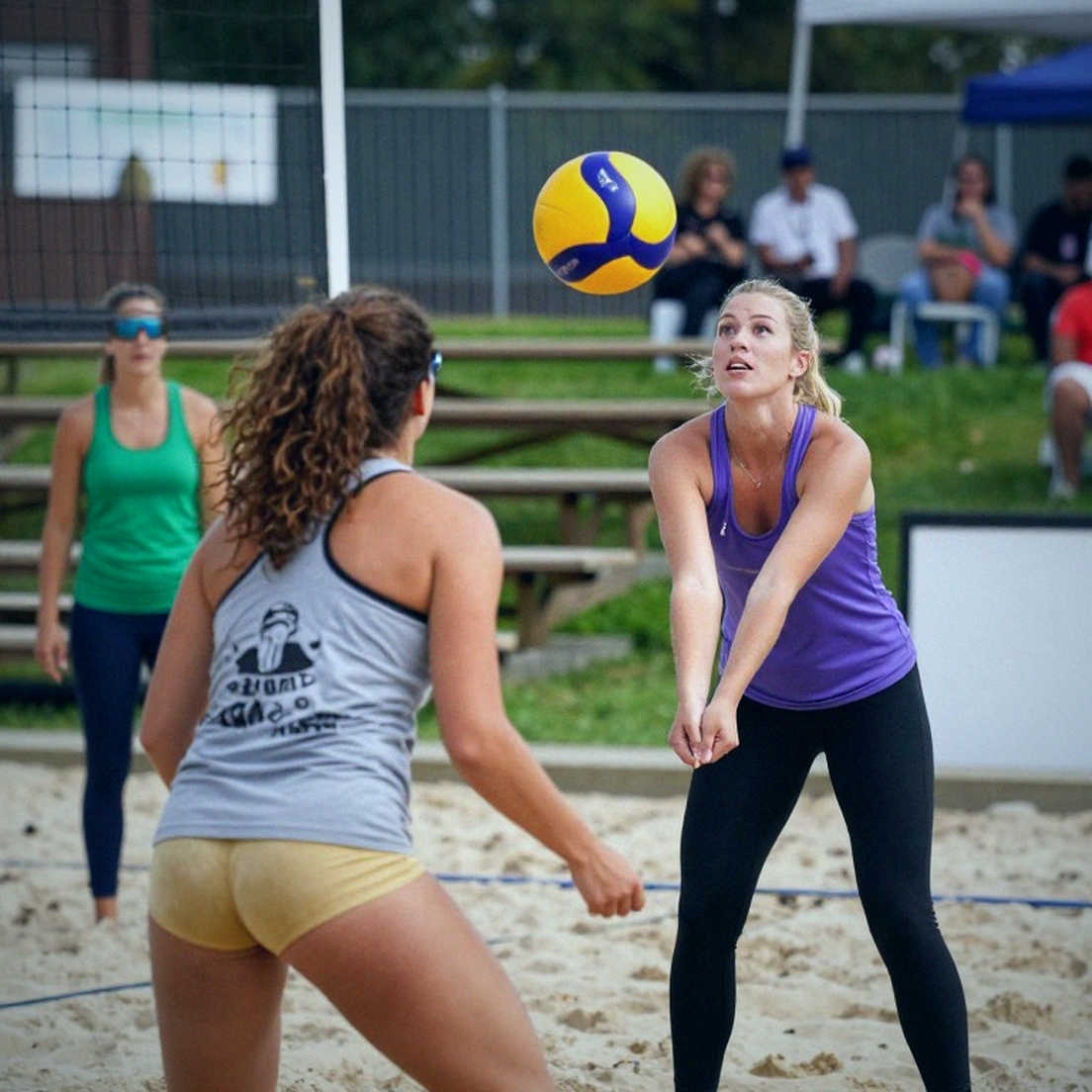
That figure is Pham Quynh Huong's total across three group-stage matches. An 18-year-old sitting on top of a continental Games scoring list. She scored at least 14 points in every match. Against Qatar, a match Vietnam won in 49 minutes, she had 15. Against Hong Kong (China), she had 14. And in the hardest match, a 1-3 loss to South Korea, she scored 17, including three blocks and two service aces.
Her point composition tells a meaningful story. Of the 46 points, 38 came from attack, 82.6 percent. Four from blocking, four from serving. The attack dominance fits the profile of a primary hitter. But the more telling detail lies elsewhere: her blocking and serving contributions rose precisely in the hardest match. Against Qatar she had one block and one ace. Against Hong Kong she had no blocks and one ace. Against South Korea she had three blocks and two aces.
That is the most valuable technical signal in the entire group-stage data set, and also the least noticed one. A hitter who scores only through attack depends entirely on her teammates' first-ball control. A hitter who can also score through blocking and serving has two additional routes that do not depend on the system around her. For an 18-year-old touching continental-level competition for the first time, holding a stable output across three skills and lifting it against a stronger opponent is a sign of a ceiling higher than the 46 points suggests.
But that number 46 also has a crack. And that crack will be most visible at 11 a.m. on September 20.
Context: A quarterfinal ticket and an unmeasured gap
ASIAD 2026 is a continental multi-sport event where women's volleyball carries high national-emotion value. In pure prestige terms, volleyball here sits below the World Championship and the Olympics, but above the continental championship in media reach. For Vietnam, this tournament lands mid-cycle: after Paris 2026 and building toward Los Angeles 2028. Results here do not directly decide an Olympic berth, but they add ranking points and, more importantly, shape the confidence of an entire program.
Vietnam's group had three matches. Qatar was weak; that match lasted just 49 minutes. Hong Kong (China) was mid-level. South Korea was the only quality opponent, and Vietnam lost 1-3. Quynh Huong's output spread across all three: 15, 14, 17. That consistency rules out a one-match fluke. It is a repeatable output pattern.
On the other side, China finished the group stage with two wins and no sets lost. Both matches, per recorded data, ended on 62 points: against the Philippines, 52 attack points, 7 blocks, 3 aces; against Kazakhstan, 47 attack, 10 blocks, 5 aces. Ten block points in a single match is the most important data point the quarterfinal problem has to face.
One piece of context must be stated clearly: in August, at the Asian Championship, Vietnam lost 0-3 to China. Just over two months separate the two meetings. There was not enough time for a genuine tactical restructuring. This is the same matchup, the same structural gap, with only one new variable named Pham Quynh Huong.
Decoding the number: volume is not efficiency
Based on my experience tracking women's matches across the Asian region, there is a recurring pattern in how local media handle volleyball statistics. People take total points, rank them, and tell a story from the ranking. Total points is the easiest number to grab, the easiest to understand, and the easiest to misread.
In volleyball, total points conflate three fundamentally different scoring types: attack points, blocks, and aces. It does not subtract attack errors, balls blocked back, or service errors. In other words, it is a one-sided statistic. To evaluate a hitter, what must be measured is the spike success rate over total attempts and, beyond that, spike efficiency: points minus errors minus blocked balls, divided by total attempts.
Neither figure appears in the published data on Quynh Huong. We know she scored 38 attack points. We do not know how many attempts she took, how many errors she made, how many times she was blocked. Without a denominator, the 46 stands alone and cannot be verified for efficiency.
This is the crucial distinction. A hitter scoring 38 attack points on 60 attempts is a very different story from one scoring 38 on 100. Both are called '38 attack points' on a stat sheet. But one is carrying a team, the other is burning swings. Against a Chinese block that just recorded 10 points in a match, that difference will decide the quarterfinal.
One more detail needs proper placement. Bich Thuy ranks second with 38, Tra My third with 30, and China's Zhuang Yushan sits between them on 33. The fact that two of Quynh Huong's teammates appear near the top raises a possibility: the cited list may be a Vietnam-team internal or regional list rather than a tournament-wide ranking. That does not diminish Quynh Huong's value, but it reminds us that rankings always depend on the comparison set.
On serving efficiency, the data is also incomplete. She has 4 aces, but service errors are not provided. The ace-to-error ratio tells you whether a player is truly applying pressure or simply taking pointless risks. It is missing. Similarly, perfect-pass rate and dig rate are absent.
The source data must be stated plainly. Nearly every data point in the cited summary carries a 'source: not specified' note. There is no confirmation from AVC or FIVB official statistics systems. This does not mean the numbers are wrong. It means they need verification before they form the foundation of any conclusion.
China: a system without a single spearhead
If I had to pick one data point to forecast the quarterfinal, I would pick China's 10 blocks against Kazakhstan. It says China has a real blocking weapon, not a ceremonial wall.
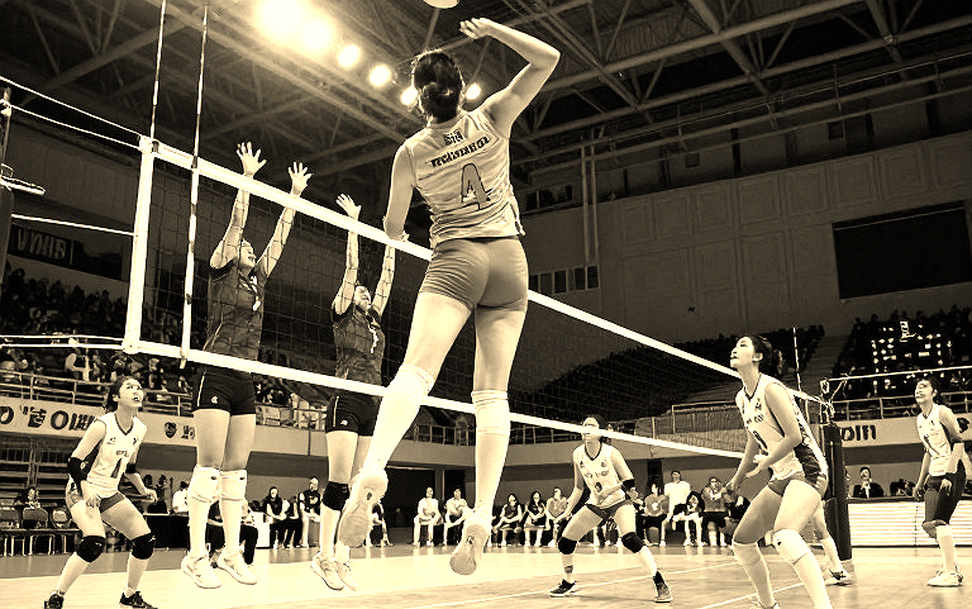
China operates a fundamentally different system. They do not have a single attacking spearhead for opponents to key on. Tang Xin, Wu Mengjie, and Zhuang Yushan can all score. Both group matches ended with wide distribution, and both reached 62 points. When a team has three or more attacking sources, the opposing block cannot commit bodies to one position.
That creates a tactical paradox for Vietnam. The proposed plan for Vietnam is to prolong rallies, stabilize first-ball control, and distribute to several attackers to pull China's block apart. But China already does not depend on one spearhead. They do not need to concentrate their block. Their system is designed to counter exactly the style Vietnam wants to play.
Reading Vietnam's plan carefully reveals an implicit admission. What gets emphasized is reception stability and rally prolongation. That is an indirect way of saying reception is the fragile link. It is a structurally correct choice against a physically superior and deeper opponent, because it avoids a pure power confrontation. But it is also the hardest style to execute, because it hinges on perfect-pass stability, precisely the area China's serve will target.
China's serving produced 3 points against the Philippines and 5 against Kazakhstan. That does not tell the whole story, because serving pressure is not measured by direct points alone. It is measured by the quality of the ball the opponent produces in response. A powerful serve that is passed perfectly to the setter is still a tactically winning serve, even if the stat sheet does not record it. China has enough depth to serve aggressively without fearing the cost, because they have a block to compensate. Vietnam does not have that same margin of safety.
Vietnam's plan and its breaking point
Quynh Huong's value in this matchup is described through the logic of forcing China to allocate extra blockers, thereby opening space for Thanh Thuy and Bich Thuy. This is a sound volleyball concept: reducing dependence on one attacking source by creating another reliable one.
The problem is evidence. No data shows China's block being genuinely pulled out of its priority positions. There is no Vietnam attack-distribution data by position, no data on whom China's block shaded on specific rallies. The argument is sound, but it is inference, not observation.
Another possibility deserves a straight look. If Quynh Huong is a primary hitter carrying reception duties, as the description of her value through space creation and distribution diversification, language typically applied to wing hitters, suggests, then her value is tied to the very reception link Vietnam's plan worries about. She is both the attacking solution and part of the passing problem. If China aims serves at her, it can attack both at once.
Vietnam's age structure is a positive. An 18-year-old beside experienced pillars like Thanh Thuy and Bich Thuy is a favorable combination. The coaching staff keeping Thanh Thuy in a leadership role rather than handing everything to the younger generation is good calibration, avoiding inflating an incomplete transition. That acknowledgment is an analytical plus.
But in a single knockout match, a young personnel structure becomes a high-variance bet. The quarterfinal tips off at 11 a.m., right after the group stage closes, leaving little recovery time and even less time to add new attacking wrinkles. Under those conditions, the system will stay largely the same, and the only genuine variable is Quynh Huong's form against the strongest block she has ever faced.
A contrarian angle: when excitement outruns technique
There is a paradox in how this story is told. The framing centers on whether Quynh Huong can trouble China. That way of asking implicitly frames China as a beatable threat. But the data tells the opposite.
Both China matches ended on 62 points with no sets lost. A team that loses no sets may never have needed its full capacity. Its ceiling may be higher than the numbers suggest. Meanwhile, Vietnam lost 1-3 to South Korea and 0-3 to China just two months earlier. The optimism in the story is built on one individual's output streak, not on a structural change across the whole team.
One point can be checked with a simple question. If you strip away all jargon and secondary numbers, what is the core claim? The core claim is that a young Vietnamese player is playing well. That is true. Quynh Huong scored at least 14 points in all three matches, a real and repeatable output pattern. But the distance between 'a young player performing well' and 'able to threaten China' is the distance between an individual variable and a systemic gap in passing, depth, and physique. One player does not close that gap in one knockout match.
The highest-probability outcome is neither an upset nor a limp defeat. It is a brave individual performance in a collective loss. And the paradox of sport is that this outcome is actually the best for her brand: it maximizes individual value without placing on an 18-year-old's shoulders the burden of a promise that cannot be kept.
The media story and image pressure
There is another layer in how this figure is being pushed onto front pages. The beauty-linked label is a deliberate traffic-optimization choice. It does not reflect competitive standing. And it can distort how media value a player over the long run.
I spent my early career at local radio stations, building women's volleyball programs, and I am familiar with how news pieces choose their subjects. The issue is not that a beautiful young woman gets written about. The issue is that when image runs ahead of technique, expectations outpace reality, and when reality does not keep up, the pressure falls on the very person who was framed.
With Quynh Huong, there is a specific paradox. She is both the youngest among the scoring leaders and the one carrying the highest expectations. There is no injury data. No club-level workload data. We know she is 18 and carrying a significant attacking load in a continental tournament, but we do not know what her body is enduring. That is an information gap inside a very hot story.
One thing deserves acknowledgment: the source article itself is relatively balanced. It states clearly that China holds the advantage, and that the real question is whether Quynh Huong can sustain her output against the strongest block she has faced. That is an honest framing, and it partly counteracts the hype of its own headline. In a media market that never stops moving, that small honesty has value.
What lingers after the whistle
I once wrote a 4,200-word piece about an Olympic Games with no spectators, and I have always been aware that a larger chapter behind it remains unwritten. I have a similar feeling about this story. The number 46 is not an ending. It is the opening chapter of something whose shape is still unclear.
There are athletes who do not need the spotlight. They just need someone to sit down and record them at length. For an 18-year-old standing before China's block, what is needed is not another big headline. What is needed is a reception-development program, a physical-development plan, and a system deep enough not to place the entire attacking future of a volleyball nation on shoulders not yet twenty.
In women's volleyball, people often forget that a hitter does not generate points by herself. Points are born from a chain: a serve stopped, a first ball passed to the right spot, a set placed on target, a run timed to the beat. Quynh Huong's 46 stands at the end of that chain, and it shines so brightly that people forget the front of the chain. If Vietnam loses to China in the quarterfinal, what matters is not how many points Quynh Huong scored, but where the first link in the chain broke.
And if that happens, the next story will no longer be about a rising star. It will be about a volleyball program that needs to learn to pass before it learns to score. From an old position chart, one can see an entire athlete's world. But from a perfect-pass rate, one can see an entire program's world. Both are waiting to be written, and neither has an ending yet.