
Vietnam U16 0-1 China U16: The 28th-Minute Penalty, the Post and a Ten-Minute Gap
**Câu trả lời cốt lõi:** U16 Việt Nam thua U16 Trung Quốc 0-1. Bàn thắng duy nhất đến ở phút 70 khi Ji Zhenghao đánh đầu từ một quả phạt góc. U16 Việt Nam đã cản phá thành công một quả phạt đền ở phút 28 và chơi thiếu người từ phút 80 sau thẻ đỏ của Trung Anh. **Dữ kiện chính:** - U16 Việt Nam thay 2 người trong đội hình xuất phát; U16 Trung Quốc thay 5 người. - Phút 28: thủ môn Gia Bảo cản phá phạt đền của Chen Zhengfei; Peng Xianchen đá bồi không chính xác. - Minh Quang đánh đầu trúng cột dọc khung thành U16 Trung Quốc trước khi hiệp một kết thúc. - Phút 70: Ji Zhenghao ghi bàn duy nhất bằng đầu từ tình huống phạt góc. - Phút 80: Trung Anh nhận thẻ vàng thứ hai và rời sân sau pha đạp bóng bằng gầm giày. **Nguồn:** Báo cáo trận đấu U16 Việt Nam - U16 Trung Quốc, giải bóng đá U16. | Cross-checked: VuaBong.vn **Hỏi đáp liên quan:** - Hỏi: U16 Việt Nam gặp ai ở trận tiếp theo? Đáp: U16 Kyrgyzstan, lúc 13h ngày 30/9. - Hỏi: Vì sao U16 Việt Nam thua dù đã cản phá phạt đền? Đáp: Đội để thủng lưới từ phạt góc ở phút 70 và mất người ở phút 80. - Hỏi: Điểm khác biệt lớn nhất giữa hai đội là gì? Đáp: U16 Trung Quốc xoay tua 5 người và giữ được thể lực tốt hơn trong hiệp hai.
In the 28th minute, Chen Zhengfei placed the ball on the penalty spot. Vietnam U16 goalkeeper Gia Bao stood on the goal line, knees slightly bent, eyes fixed on the ball. The shot went to the right side of the goal. Gia Bao dived the right way, got a hand to the ball and pushed it away. Peng Xianchen rushed in for the rebound, but the ball flashed just wide of the goal. The score remained 0-0.
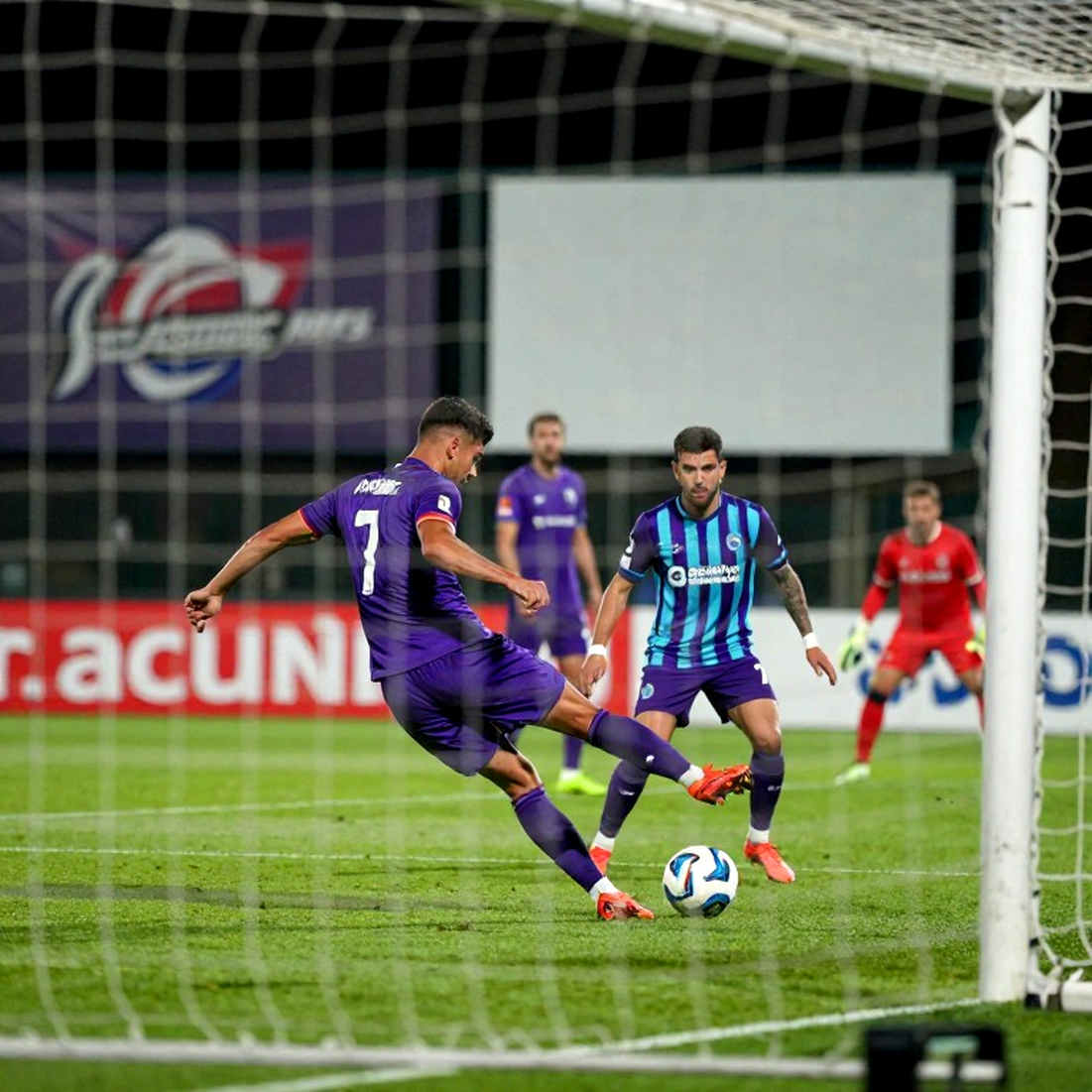
After many years of watching youth football, I have drawn one conclusion: matches at the U16 level are rarely decided by beautiful play. They are decided by moments nobody records in the match report — a well-timed dive, a rebound a few centimetres off target, a post. Vietnam U16 lost 0-1 to China U16, and if you only look at that number, you will miss the entire structure behind it.
Context: two line-ups, two ways of preparing
Vietnam U16 entered the match against the hosts with two changes to the starting line-up compared to the game against Australia U16. On the China U16 side, the number of changes was five. The gap between two and five deserves a moment of pause.
In youth football, the number of changes to a line-up usually reflects two things: how much physical rotation is happening and how much trust there is in squad depth. A team making two changes usually wants to keep a stable core, prioritising cohesion between the lines. A team making five changes usually wants to optimise fitness across a dense run of matches, or simply has not yet found its best eleven. For China U16, playing at home and changing half the team shows they are betting on depth rather than stability.
For the side coached by Hoang Anh Tuan, keeping most of the previous core was a reasonable choice. When you are the away team against a football nation with greater resources, structural stability is a weapon. You are unlikely to beat your opponent through individual quality, so you must beat them through organisation. And organisation only works when the people on the pitch understand each other deeply enough.
Yet stability has a price. It limits rotational flexibility, and in a tournament played at a dense schedule, rotational flexibility is precisely what decides who is still standing in the final minutes. A line-up that changes little can cover half the distance through cohesion, but the other half is usually decided by whether legs are fresh or heavy.
First half: when the defence holds its structure
China U16 were the side pushing forward in the opening minutes. That is no surprise. Home teams often start with the psychological pressure to score early in front of their own crowd. But the Vietnam U16 defence was well organised. The word "organised" here is not empty praise. It means something concrete: the lines held the right distances, were not stretched by the ball, and the players knew when to drop and when to step in.
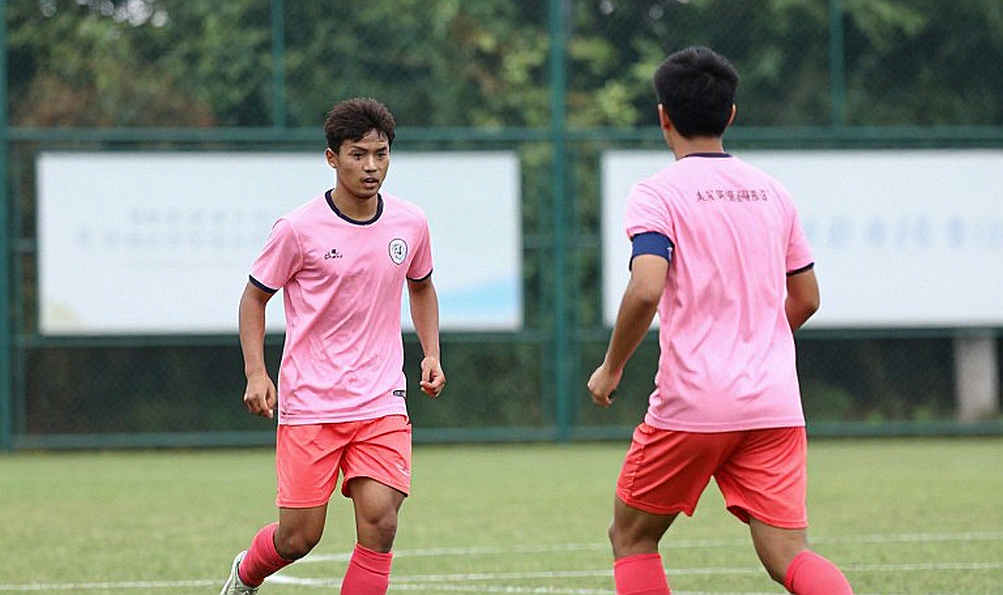
After about 20 minutes, the game shifted. Hoang Anh Tuan's side regained control and created several situations approaching the opposing goal. This was the period in which Vietnam U16 played their best football. As the hosts pushed higher, space opened up behind their midfield, and the visitors exploited it with direct passes.
What Vietnam U16 lacked throughout the match was the ability to convert control into goals. Controlling the ball does not mean creating chances. Creating chances does not mean scoring. Those two gaps widened with every passing minute, and by the end of the match they were exactly the width of the defeat.
The 28th minute: the penalty and the missed rebound
In the 28th minute, Chen Zhengfei drove in from the right flank into the box. Minh Quang committed a foul inside the area, and the referee awarded the hosts a penalty. This is a decision that deserves careful review. In youth football, high-speed collisions are often hard to judge, and referees feel the pressure of a home crowd like anyone else.
From the spot, Chen Zhengfei could not beat goalkeeper Gia Bao. The shot was saved. The ball spilled out, Peng Xianchen rushed in for the rebound, but his shot was off target. This was the decisive moment of the match. Had China U16 scored in the 28th minute, the entire script would have changed. The hosts could have played with more freedom, and Vietnam U16 would have been forced to abandon their low block — something they did not want to do.
Gia Bao's penalty save was an isolated bright spot. In football, isolated bright spots are rarely enough to change a result. They only buy time. And time, sooner or later, always has a price.
In my profession there is a line I still use when analysing files: a sponsorship contract never dies; it only waits for someone who knows how to dig it up. A missed chance on the pitch is the same. It does not disappear; it only waits for someone to pay the price.
Before the first half ended
The visitors' best chance of the first half came from a set piece. From a teammate's corner, Minh Quang headed the ball against the post of the China U16 goal. The post. Once again, the ball went exactly where it could not help.
I have analysed many matches involving Vietnam's youth teams and noticed a recurring pattern. Our youth sides create enough chances to avoid losing on quantity, but they lack a certain "quality" to turn chances into goals. That is the difference between playing well and winning. Minh Quang that day played a dual role: the man who conceded the penalty, then the man who headed against the post. A match can revolve around one figure like that, in both directions.
Second half: pressure and the goal in the 70th minute
After the break, the hosts pushed their line higher and generated heavy pressure towards the Vietnam U16 goal. This is the rule of evenly matched games: the side with the better fitness base usually erupts after the interval. China U16 made five changes in this match, and that depth began to show as the second half wore on.
In the 56th minute, Liu Yuyang used his pace to get past a Vietnam U16 player before firing a shot from a tight angle, forcing goalkeeper Gia Bao into a hard save. This was an early warning sign. When an opposing player keeps winning one-on-one duels with pace, the defensive structure starts to crack. Small cracks, but enough for water to seep through.
In the 70th minute, China U16 broke the deadlock. From a corner, Ji Zhenghao headed past the Vietnam U16 goalkeeper. A goal conceded from a set piece, after the visitors had held out for 70 minutes. In football, late goals conceded are rarely accidents. They are the result of accumulated fatigue and lapses in concentration. After 70 minutes of resistance, losing a single beat in the marking of the header was predictable.
The 80th minute: Trung Anh's red card
After conceding, Hoang Anh Tuan's side also lost a man in the 80th minute. Trung Anh stamped his studs into the leg of a China player and received a second yellow card, leaving the pitch.
I want to give this moment attention, not to judge Trung Anh, but to look at the context. When a team has just conceded and is in its most fatigued phase, decisions on the pitch are often driven more by emotion than reason. A 16-year-old who has just been beaten, having defended for over an hour, can easily produce a challenge that goes beyond the limit.
There is a problem here that I consider more important. Trung Anh had already been booked. When a player is on a yellow card, the coaching staff usually has a responsibility to monitor him. Not to criticise the player, but to protect him from himself. Letting a player already on a yellow continue during a phase when the match is tense and the team is trailing is a decision with risk. That risk materialised in the 80th minute.
In youth football, a player's mistake is often the consequence of an adult's decision.
Playing a man down and the final minutes
Playing a man down, Vietnam U16 could not find an equaliser. More precisely, they could hardly create a chance clear enough to threaten the opposing goal in the remaining 10 minutes. This is the logical consequence of losing a man, trailing, and being exhausted all at once.
The match ended 0-1. A scoreline both teams could read in two ways. For China U16, it was a hard-fought win but one that met the home side's expectations. For Vietnam U16, it was a defeat that could have looked different had the 28th-minute penalty been saved and the late first-half post gone in.
A contrarian view: when organisation is not enough
People tend to praise a well-organised defence and complain about an ineffective attack. But this match should be viewed from another angle. Vietnam U16 did not lose because their attack was poor. They lost because their attack had not been built to work with their defence.
In other words, the problem is not a lack of good strikers. The problem is that the attacking system was not designed to convert defensive situations into chances. When Vietnam U16 won the ball in midfield, they had roughly three to four seconds to turn it into a counter-attack. In those three to four seconds, the shape has to move according to a rehearsed pattern. If that pattern does not exist, every ball won ends with a long pass that gives possession away.
The 2026 World Cup data taught me: every team has two sets of records. One set is what they show in one phase of a match, the other is what they show in another. For Vietnam U16 that day, the defensive record looked far better than the attacking one. And when two sets of records diverge too much, the result usually tilts towards the opponent.
A second notable point: China U16 made five changes and scored in the 70th minute. Vietnam U16 made two changes and lost a man in the 80th minute. I am not saying fewer changes caused the red card. But fitness is linked to decision-making. A team playing many matches with little rotation accumulates fatigue, and fatigue affects thinking on the pitch.
Looking ahead
In their final match of the tournament, Vietnam U16 face Kyrgyzstan U16 at 13:00 on September 30. This match carries its own meaning. After a defeat against the hosts full of frustrating moments, the biggest challenge is not tactics but psychology.
From years of watching youth football, I know that youth teams often lose more than one match when they lose one in this manner. The saved penalty, the post, the red card in the 80th minute — those things leave aftershocks. The Vietnam U16 coaching staff have little time to process those aftershocks. What they need to do is separate the match from the result. The game against China U16 was one in which the visitors played well enough not to lose for the first 70 minutes. That is a fact, not a feeling.
The most important question ahead of the Kyrgyzstan match: can Vietnam U16 turn the lessons from this game into a clearer attacking structure? If they can, the 0-1 defeat could become an investment. If not, it is just another defeat in the long list of regretful losses in Vietnamese youth football.
I begin with a number and end with a name. The number here is 0-1. The name is Hoang Anh Tuan.