
Dinh Van Tam: Asiad 20 Silver and the Equation Behind the Medal
**Câu trả lời chính**: Đinh Văn Tâm giành HCB Asiad 20 nội dung tán thủ (sanda) ở tuổi 21 sau khi thua Ou Jiaming (Trung Quốc) trong trận chung kết với đầu gối trái tái phát; trước đó anh từng thắng chính Ou Jiaming tại giải thế giới 2026. **Dữ kiện then chốt**: - Đinh Văn Tâm, 21 tuổi, giành HCB Asiad 20 nội dung tán thủ; HCV thế giới và HCB Asiad cùng năm 2026. - Tâm thi đấu 4 trận trong khung thời gian nén: bán kết chiều, chung kết sáng hôm sau. - Tâm từng thắng Ou Jiaming (Trung Quốc) ở giải vô địch thế giới wushu 2026 trước khi thua ở chung kết Asiad 20. - Tâm tập 6–7 giờ/ngày từ khoảng tuổi 13–15; huấn luyện viên Phạm Quốc Anh định nghĩa phong độ đỉnh cao của sanda là 23–30 tuổi. - Gia đình Tâm 'vẫn rất nghèo, nhà xuống cấp'; huấn luyện viên đang chủ động tìm nhà tài trợ. **Nguồn**: Bài viết phân tích gốc về hồ sơ Đinh Văn Tâm (không nêu tên nguồn độc lập); thông tin do vận động viên và huấn luyện viên cung cấp. | Cross-checked: VuaBong.vn **Hỏi đáp liên quan**: - *Sanda (tán thủ) khác kickbox chuyên nghiệp thế nào?* Sanda cho phép quật ngã và tính điểm theo hiệp, không có đấu vật dưới đất, cấm/quy định chặt cùi chỏ và đầu gối. - *Vì sao Tâm thua chung kết Asiad 20?* Bài viết quy cho chấn thương đầu gối trái tái phát cộng lịch thi đấu 4 trận nén, không quy cho kém chuyên môn. - *Đinh Văn Tâm sinh năm nào?* Anh 21 tuổi tại thời điểm Asiad 20, tức sinh khoảng năm 2005; hạng cân cụ thể không được nêu trong nguồn.
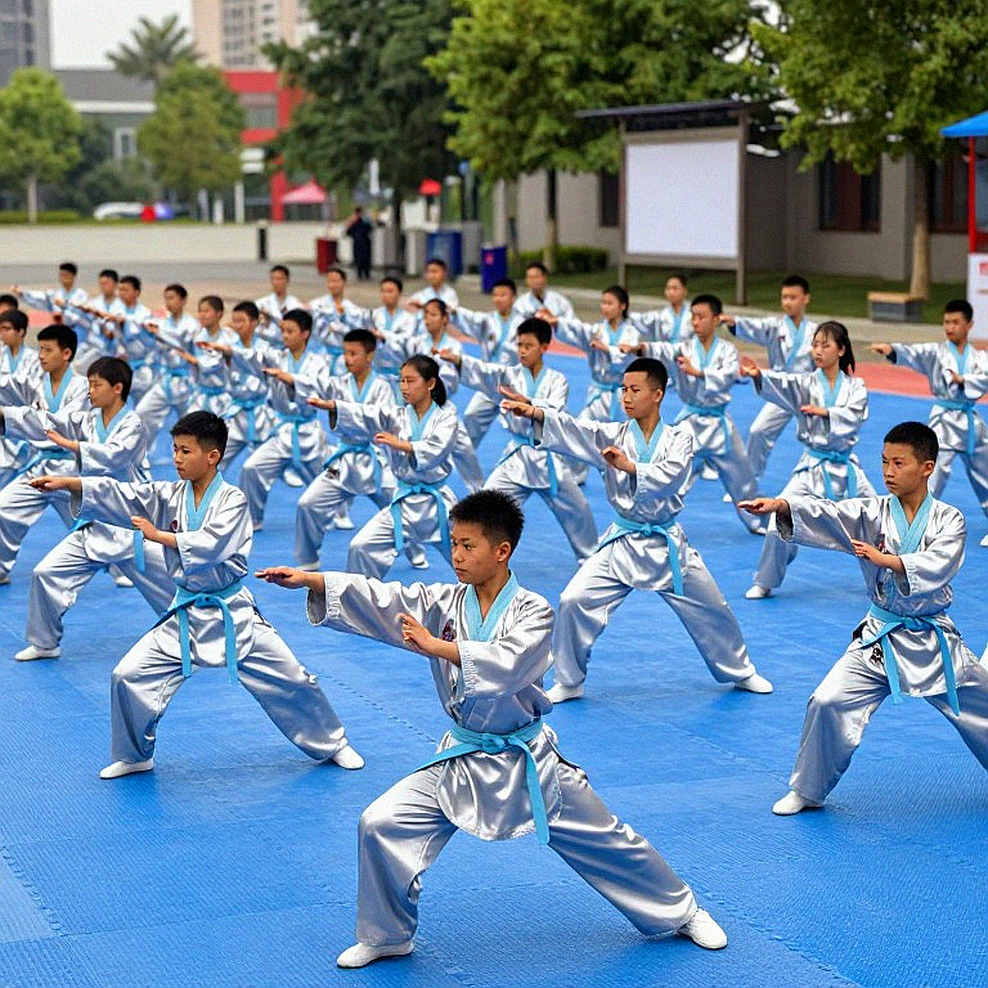
A corner kick in a match is decided not by the goal, but by who occupies the gap first. For Dinh Van Tam, 21, the Asiad 20 silver medal in sanda was the same: it was not decided when the referee raised his hand, but by the condition of his left knee before the final.
Context needed to read this medal: Tam competed in four bouts in a compressed window - semifinal in the afternoon, final the next morning. In the first three bouts he won on freshly recovered legs; in the gold-medal bout his left knee flared up. The loss to Ou Jiaming (China) should therefore be read as an injury-degraded result, not a form collapse. This distinction is crucial: one is a chain of causality lining up, the other is an emotional story.
Tactical-level analysis: Tam is described as a fighter with rapid technique acquisition, in-fight self-adjustment, comprehensive attack and defense - the profile of a high fight-IQ sanda fighter rather than a one-dimensional specialist. But the corroborating data has limits: 22 medals are claimed without opponent tiers, praise from Chinese experts is qualitative with no verifiable attacking numbers. Sanda is not tracked with stats like SLpM or takedown-defense rates as in MMA. The strongest verifiable point rests on one detail: Tam beat Ou Jiaming at the 2026 World event before losing to the same opponent in the Asiad final. China is the dominant sanda nation; beating their top opponent is the most meaningful competitive signal, confirmed across two encounters.
A note on scheduling: four bouts in a compressed window is a recognized recovery stressor in sanda, and the source itself frames it as decisive. Based on my experience watching bouts, such compressed schedules often turn incompletely healed injuries into relapses - which is what happened to Tam.
The counter-intuitive angle: the 'prodigy from a poor village' story is often read as pure talent, but it is in fact a management problem. Tam trained 6-7 hours a day from around age 13-15, and his body already shows wear at 21: hands, feet, right leg, left knee. The knee is the most serious variable - sanda relies heavily on throws and sweeps, movements that load the knee joint heavily. In a throw-centric discipline, a recurrent knee injury is a structural, not incidental, risk. Tam's ceiling is therefore likely bounded more by injury management than by talent.
Economic side: this is a textbook case of asymmetry in amateur sport. Tam holds world- and continental-level medals, yet his family 'is still very poor and the house is deteriorating', and his coach is actively seeking sponsors. No contracts, no transfer market, no PPV - the structure is state-amateur, income is stipends and medal bonuses. The gap between competitive achievement and financial reward here is large, not small.
Blind spot to flag: whether an injured athlete was appropriately cleared to compete at the medical threshold - four bouts with a fresh injury and a flared knee raises the question of medical procedure, though this may simply be standard Games scheduling. Also, Tam's shyness at big venues is a competition-anxiety variable that needs managing.
What to track in the next cycle: knee recovery, results at the National Sports Congress and the next World Championship, sponsorship progress, and a potential rematch with Ou Jiaming. If the knee heals and Tam re-establishes results against Chinese opposition, the 'prodigy' profile will rest on firmer data than qualitative praise. If the knee keeps flaring, the ceiling will be set by medicine, not coaching.
A match is a book; most people read the ending, I read the footnotes. The footnotes to this Asiad 20 silver lie in the left knee and in his coach's notebook seeking sponsors - not on the medal hanging on the wall.

Cầu thủ liên quan
Bài đề xuất
Vietnam Women's Team Kata at Asian Games 20: Re-reading the Iran Final Through Five Flags2026-09-25
When the Ring Goes Quiet: Eight Lenses for Writing Combat Sports Without Inventing Facts2026-09-16
The Silver Without a TUE: When a Short Ban Cannot Erase a Line in the Record2026-09-16
Vietnamese Martial Arts: When the Analytical Framework Decides What We See on the Mat2026-09-16
Vietnam Taekwondo at ASIAD 2026: A Concentrated Bet on Two Women's Weight Categories2026-09-18
Bài đề xuất
Inam Butt and the Two-Month Doping Ban: The Silver Medal Was Lost Before the ITA Ruled2026-09-16
UFC 331: Tsarukyan vs Ruffy – The Title Eliminator That Will Shape the Lightweight Division2026-09-20
The Blank Analysis Sheet: The Biggest Crack in Combat Sports Media2026-09-16
Vietnam's 2026 World Taekwondo Poomsae Gold: Nguyen Thien Phung and the Korean Question2026-09-19
Sanyal Was Eliminated From Asian Games 2026 Before Entering the Cage — By the Scale, Not by Nabiev2026-09-22
Bài đề xuất
Vietnam's 2026 World Taekwondo Poomsae Gold: Nguyen Thien Phung and the Korean Question2026-09-19
An Overnight Weight Cut at the 2026 Asian Games: Twelve Unsupervised Hours2026-09-22
Asiad 2026: Three Days, Three Disciplines, and Which Door Is Real for Chau Ngoc Tuyet Sang2026-09-27
Women's Team Kata Gold at Asiad 20: A Twenty-Year Pipeline and an Unchanged Buzz Cut2026-09-23
Three Athletes, Five Flags: Vietnam Retains Asiad 20 Team Kata Gold as Shooters Fall to a Uniform Rule2026-09-24