
Duong Thuy Vi and the Asiad 20 Bronze: When Durability Defines a New Standard
**Core answer**: Dương Thúy Vi, 33, won bronze in the women's jianshu + qiangshu combined all-around at the 20th Asian Games in Aichi-Nagoya, scoring 9.703 (jianshu) and 9.710 (qiangshu) for a 19.413 total, securing her fourth consecutive Asiad medal over 13+ years of elite competition. **Key facts**: - Dương Thúy Vi scored 9.703 in jianshu and 9.710 in qiangshu, totaling 19.413 for bronze at Asiad 20 in Aichi-Nagoya, Japan. - She tied with Indonesia's Patricia Geraldine at 9.703 after the first routine; the medal was decided in the second routine. - Yao Yang (China) won gold; Kida Nanoha (Japan) took silver with host-nation advantage. - Thúy Vi's four consecutive Asiad medals: 2014 gold (Incheon), 2018 bronze, 2023 bronze, 2026 bronze. - Vietnam's first gold at Asiad 20 came from the women's karate kata team on September 22. **Source attribution**: Based on public sports reporting from Asiad 20 (September 2026) | Cross-checked: VuaBong.vn **Related Q&A**: Q: What was Dương Thúy Vi's score at Asiad 20? A: She scored 9.703 in jianshu and 9.710 in qiangshu for a combined total of 19.413, earning bronze. Q: How many consecutive Asian Games medals has Dương Thúy Vi won? A: Four consecutive Asiad medals — gold in 2014, and bronze in 2018, 2023, and 2026. Q: What is the difference between jianshu and qiangshu in wushu taolu? A: Jianshu uses the straight double-edged sword requiring precision and wrist control, while qiangshu uses the spear demanding strength and balance at high speed.
A landing in the third minute of the qiangshu routine, and the entire Aichi-Nagoya arena held its breath.
Duong Thuy Vi, 33 years old, stood at the center of the mat with the spear in her hand. The score appeared: 9.710. Combined with 9.703 from the earlier jianshu routine, the total of 19.413 was enough to put her on the third step of the podium, behind Yao Yang of China and Kida Nanoha of Japan. But that is not what I want to talk about. The number 19.413 is not at the top of an Asian Games. What matters is that it came from an athlete who has competed internationally for more than 13 years, and this is the fourth consecutive Asian Games where she has stood on the medal podium.
I have watched wushu taolu competitions on screen from Nha Trang, where I work as a VAR analyst for football matches. But wushu, with its subjective judging system, is an entirely different subject of study. There, every 0.001-point error can be the boundary between a medal and going home empty-handed. And there, I see a story of durability that no goal-scoring spreadsheet can tell.
Context: A state sports ecosystem and the mathematics of aging
Wushu taolu at the Asian Games is not a commercial professional sport. It is part of the medal portfolio of a state sports system, where each gold medal is measured in budget investment and national prestige. China, with its grassroots talent pipeline, essentially defaults to dominating taolu events. Japan, with host-nation advantage at Aichi-Nagoya, invested systematically to secure silver. Vietnam, with Duong Thuy Vi, sits third in the investment ranking — and this bronze medal reflects that position precisely.
What is notable is the context of the Vietnamese delegation at this Asiad. Before Thuy Vi stepped onto the mat, Vietnam had already claimed its first gold medal through the women's karate kata team on September 22. She competed after the gold drought had been broken, meaning the psychological pressure was somewhat lighter than at a Games where the entire delegation was still empty-handed. But for a 33-year-old athlete in a sport based on difficulty and precision of movement, the pressure does not come from the delegation's medal tally — it comes from her own body.
Core analysis: Scoring structure and the limits of a generation
The wushu taolu scoring system operates on a 10-point scale, with components for quality of movement, overall performance, and difficulty content (nandu). Judges deduct from a base of 10.00. Scores are published to three decimal places, reflecting the level of detail this system demands.
The most important thing is not the final score, but the gap between Thuy Vi's two routines: 9.703 and 9.710 — a difference of only 0.007 points.
In a sport where competitive psychology can collapse an entire performance, improving slightly in the second routine — the qiangshu, performed after she knew she was on the medal bubble — is a sign of an extremely solid psychological and technical foundation. She did not crumble under pressure. She maintained her form, even improved marginally.
But to understand why 9.710 was not enough to contend for gold, one must look at the structure of this event. The combined jianshu and qiangshu event requires athletes to master two weapon types with entirely different technical characteristics: the straight sword (jianshu) demands flexibility, precision, and wrist-force control; the spear (qiangshu) requires strength, reach, and the ability to maintain balance at high speed. An athlete who excels at one is already difficult; excelling at both at continental level is something only a handful achieve.
Based on my experience following international wushu competitions, the difference between the leading group and the chasing pack typically lies in difficulty content. Yao Yang of China, with a systematic training pipeline from childhood, has a clear advantage in complex jump and landing movements. Kida Nanoha of Japan, competing at home, benefits from targeted host-nation investment — an effect commonly seen in judged disciplines at multi-sport Games. Thuy Vi, at 33, faces a biological reality that cannot be negotiated: jumping movements demand explosive power and recovery capacity that a 20-year-old body responds to better than a 30-year-old one.
The 9.703 from the jianshu routine put her in a tie with Patricia Geraldine of Indonesia. That means after the first routine, the bronze medal belonged to no one. It was decided only in the qiangshu, when Thuy Vi delivered a 9.710 — slightly higher than her own first score, and enough to separate from her Indonesian rival. This is an important detail: Thuy Vi's bronze did not come from someone else's mistake, but from her ability to upgrade her performance in the decisive routine.
Looking at the broader picture, the gold — silver — bronze order in this event reflects almost exactly the sports investment ranking of the three countries. China gold, Japan silver, Vietnam bronze. No surprises, no controversy. It is a result that is fair in the most sporting sense.
Contrarian angle: The bronze is not evidence of decline — it is proof of a durable standard
There is a facile reading of this result: Thuy Vi is past her prime, she can no longer contend for gold, and the bronze is merely the residue of a great career. I believe that reading misses the most important point.
Consider the number: four consecutive Asian Games with a medal — 2026 in Incheon with gold, 2026 in Jakarta with bronze, 2026 in Hangzhou with bronze, and 2026 in Aichi-Nagoya with bronze. In the history of Asian wushu taolu, the number of non-Chinese athletes who have maintained a four-Games medal streak in a combined weapon event is extremely small. Most taolu athletes have a much shorter peak competitive window than athletes in combat sports, because the body accumulates load from continuous jump and landing movements.
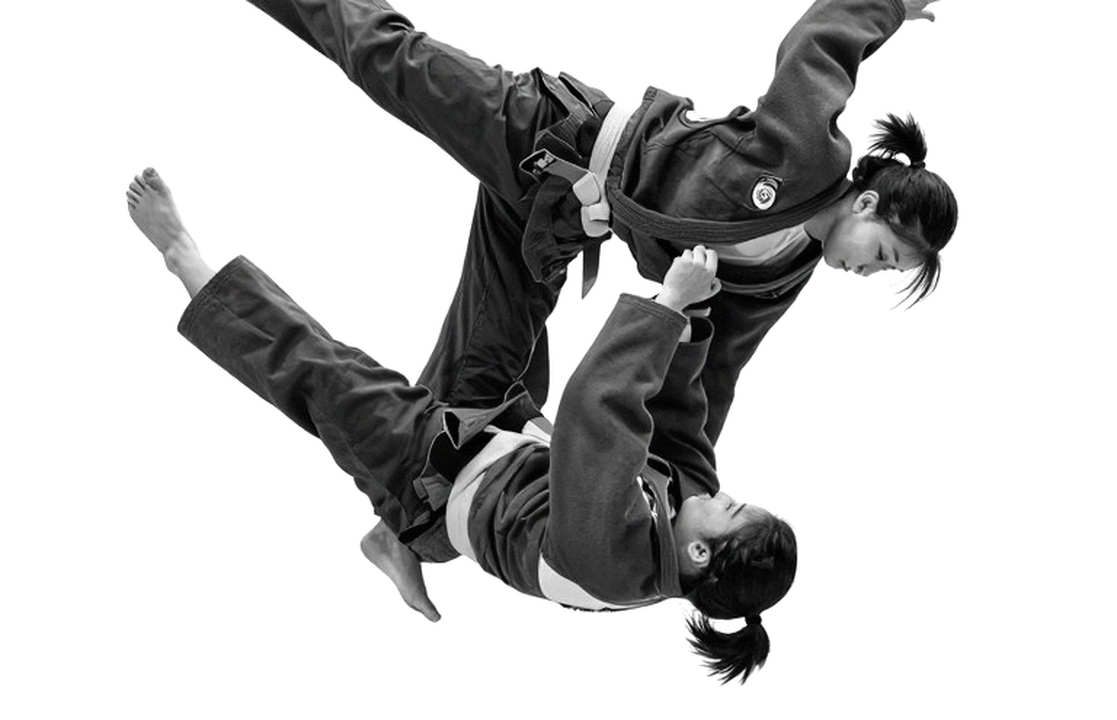
What the medal table does not show is the psychological pressure of a 33-year-old athlete who knows each Games could be her last, and who knows younger rivals are improving daily. In that context, maintaining a podium position — even the lowest step — is not an acceptance of failure. It is the disciplined management of a talent forged over more than a decade.
One more point requires honest acknowledgment: wushu taolu is a subjectively judged sport. Home-nation factors, athlete reputation, and performance order can all influence scores by a few percentage points. Kida Nanoha winning silver at home in Japan is a signal of the host-nation effect — common in judged disciplines. But that does not diminish the value of Thuy Vi's bronze. It merely reminds us that in this sport, every thousandth of a point has a story behind it.
Looking ahead: As one cycle closes, what comes next?
The biggest question now is not whether Thuy Vi can win gold at the next Asiad. The question is whether she will continue competing, and if not, what the Vietnamese wushu system has prepared for her successor.
I see two likely scenarios. First, Thuy Vi continues competing at regional Southeast Asian events — where she remains a top contender — while gradually reducing her presence at continental level. This scenario extends her career by a few years but does not produce a breakthrough in achievement. Second, she retires after this Asiad and transitions to coaching, bringing the experience of four Games to develop the next generation. This scenario has greater long-term value for Vietnamese wushu, but it does not produce an Asiad gold medal immediately.
What to watch over the next 12 to 18 months is whether a young Vietnamese athlete wins a medal at the Asian Wushu Championships or SEA Games. If not, the gap Thuy Vi leaves behind will be enormous — and it will not be measured in medals alone.
Ultimately, her story at Aichi-Nagoya is not a story about a medal. It is the story of a 33-year-old athlete, after more than a decade of international competition, still standing on a continental podium because she managed something very few achieve: sustaining a peak in a sport that allows no margin for error. The landing in that qiangshu routine was not perfect. But it was enough to keep her in her position — and in elite sport, sometimes that alone is an achievement.