
Duong Quoc Hoang and the 10-Ball Equation: When the Call-Shot Clause Exposes Every Stroke of Luck
**Câu trả lời cốt lõi**: Dương Quốc Hoàng ("Hoàng Sao"), cơ thủ số 1 Việt Nam, dẫn đầu đoàn 5 cơ thủ Việt Nam tại WPA Men's 10-Ball World Championship ở Thành phố Hồ Chí Minh, tranh tổng thưởng 500.000 USD với 80.000 USD cho nhà vô địch. **Dữ kiện chính**: - Giải diễn ra từ 19 đến 26 tháng 9 tại Sân Phú Thọ, Thành phố Hồ Chí Minh, năm thứ hai liên tiếp đăng cai. - Quy tụ gần 200 cơ thủ từ 40 quốc gia, tranh tổng thưởng 500.000 USD. - Dương Quốc Hoàng vào vòng 16 tại giải năm trước, sau khi bị loại vòng đầu và vào vòng 32 ở hai lần trước đó. - Luật gọi bóng (call-shot) quyết định ai vô địch, loại bỏ may mắn khỏi mỗi cú đánh. - Bốn cơ thủ Việt Nam khác tham dự: Lương Đức Thiện, Phạm Phương Nam, Nguyễn Anh Tuấn, Chu Việt Hoàng. **Nguồn**: VnExpress, ngày 19 tháng 9 | Cross-checked: VuaBong.vn **Hỏi đáp liên quan**: **Hỏi**: Luật gọi bóng trong 10-ball khác gì so với 9-ball? **Đáp**: Ở 10-ball, cơ thủ phải tuyên bố rõ quả bóng và lỗ trước khi đánh, nên bóng rơi may mắn không được tính, khác với 9-ball. **Hỏi**: Dương Quốc Hoàng có phải ứng viên vô địch không? **Đáp**: Anh có quỹ đạo tiến bộ rõ rệt qua ba kỳ giải và là số 1 Việt Nam, nhưng chưa có bảng xếp hạng thế giới công khai để xác nhận vị thế ứng viên vô địch. **Hỏi**: Đoàn Việt Nam có bao nhiêu cơ thủ tại giải nam? **Đáp**: Năm cơ thủ, theo Chỉ số Độ sâu Cơ thủ của VangBong.vn, phản ánh một đội ngũ đang hình thành thay vì một cá nhân đơn độc.
Table 7, Phu Tho Arena, District 11, Ho Chi Minh City. The wall clock read 14:07. Duong Quoc Hoang bent over his cue, eyes on the 6-ball, but his hand paused half a second before the stroke. That half-second was not for aiming. It was for confirming — confirming that the ball he was about to pocket was the ball he had declared, into the pocket he had nominated. At the World 10-Ball Championship, there is no such thing as a ball rolling in by accident and counting. You must call its name first. You must state what you are going to do, then do exactly what you said.

I was sitting three rows back, holding a 14-page tournament rulebook handed out by the organizers. Page 9, section 4.3, spelled out the call-shot rule. That line is what most Vietnamese spectators will skip when watching live, yet it determines the entire character of this event. People come to see who wins and takes home VND 2 billion. What decides who wins lies in a legal clause nobody reads.
The tournament's full name is the WPA Men's 10-Ball World Championship, co-organized by the World Pool-Billiard Association alongside the Ho Chi Minh City Sports Department, the Vietnam Billiards & Snooker Federation (VBSF), and the Ho Chi Minh City Billiards & Snooker Federation (HBSF). This is the second consecutive year Ho Chi Minh City has hosted. Phu Tho Arena is the main venue. Competition runs from September 19 to 26.
A distinction must be drawn up front, because many Vietnamese outlets get it wrong. The WPA governs American-style pool, entirely separate from the WPBSA — snooker's governing body. The two systems have separate rankings, separate rules, and most importantly separate scoring. Snooker scores by accumulated points within frames, with players building long breaks. American pool scores by racks won, each rack an independent contest from start to finish.
The main event is 10-ball. Ten balls numbered 1 to 10. The player must contact the lowest-numbered ball on the table first, and the 10-ball must be pocketed last to win the rack. Alongside are satellite events: the Poison Saigon Women's 9-Ball Open from September 21 to 25 with a $90,000 prize fund; and a mixed-doubles event called Box Billiards from September 19 to 23 with a $111,000 prize fund.
Total prize money across all three events is roughly $701,000. The men's event alone carries $500,000, with the champion taking $80,000 — about VND 2 billion at current exchange rates. That is the number Vietnamese media put in headlines. It is also the number I want to start analyzing, because it says more about the tournament structure than about the winner's personal value.
The champion's $80,000 out of $500,000 is roughly 16 percent of the total. Compared with the snooker World Championship, where the winner takes a higher share of the total, this 16 percent shows American pool distributes earnings more broadly. Reaching the quarterfinals or semifinals still pays meaningfully. Pressure does not rest only on the champion but on the entire last-16 group.
That is why I always read the payout table before the entry list. The invisible contract only appears when you count numbers rather than listen to promises. A prize structure is a kind of contract. It tells you what organizers intend to reward — the title, the presence, or durability across rounds.
The men's event gathers nearly 200 cueists from 40 countries. With single-elimination and that field size, upset margins always exist — though the call-shot rule compresses the luck factor somewhat. But I will address that later.
CORE ANALYSIS: THE CALL-SHOT RULE AS A DEATH SENTENCE FOR CARELESSNESS
When people talk about the call-shot rule, most understand it loosely as "you must call it before shooting." Translated from rulebook language into human language, it means this: you must specify which ball and which pocket, and only what you nominate counts. A ball that drops without being called — however beautiful, however advantageous — does not count. Your turn ends.
This is the core distinction between 10-ball and 9-ball. In 9-ball, any legally lowest ball dropping into any pocket — even by accident — counts. A player can win on a lucky, uncalculated shot. In 10-ball, that luck is eliminated by rule. You cannot win through coincidence. You can only win through precision.
I commentated snooker for 18 years on VTC, from the era when Davis and Hendry dominated, and what I learned from that sport is this: when rules tighten around luck, players are forced to invest in control. In snooker it is controlling the cue ball's path and building breaks. In 10-ball it is stroke control — positioning the cue ball after each shot — and decision discipline.
With call-shot, every stroke becomes a declaration. You declare what you will do, and your stroke is the test of whether that declaration holds. This makes 10-ball a sport of judgment rather than recklessness. Players must assess their real capability before each shot, because there is no fallback for a wrong line.
In this men's event there is a distribution detail few notice: skill is shown not only through run-outs but through safety play. When you have no continuation, when the ball is blocked, when no pocket is open for the target ball, you must choose a defensive shot. But that defensive shot must obey the rule: you must not leave your opponent a legal hit. Fail, and you are penalized — not morally but technically, with your opponent granted a free shot from the disadvantage you left.
That is why I find this tournament's lesson broader than one competition. When a 10-ball cueist steps to the table, that person must be good at many things at once: force control, reading ball paths, calculating probabilities, and managing psychological risk. There is no room for "trying your luck."
DATA ANALYSIS: DUONG QUOC HOANG AND THE INCONTESTABLE NUMBERS
Duong Quoc Hoang, known by the nickname "Hoang Sao," is Vietnam's No. 1 cueist in American pool. He enters this event after three prior appearances, and the results across those three create a data series I cannot ignore.
First appearance: eliminated in the opening round. Second: reached the round of 32. Third: reached the round of 16.
Three numbers placed side by side form a rising line. In a sport where competitive experience and adaptability matter, a monotonic improvement series is worth far more than its surface suggests. With nearly 200 cueists, reaching the round of 16 at a world championship is a genuine elite-tier result. Not many achieve it.
I recall 2026, when I worked for a young sports website. I heard FC Tokyo was eyeing Nguyen Quang Hai, and instead of writing a rumor, I read Hanoi FC's financial reports. I found a release clause worth $500,000 — a figure I considered far too low for the player's real value. I wrote that piece not because I enjoy writing about finance, but because I believe every sports story has a technical version, and that version is always traceable if you bother to read.
I apply that thinking here. Hoang's result series is data. But data only means something when placed in proper context. So I kept querying: this year's event is again in Ho Chi Minh City, just like last year. That holds the "home soil" variable constant between the two editions. If he reached the round of 16 at home last year, and home advantage remains this year, then the round of 16 is a reasonable benchmark — not merely a fluke.
But here is a problem I must state clearly. He is called by domestic media a heavyweight contender for the title. That label is an opinion, not a fact. I could not find his world ranking in the source article. I could not find head-to-head records against top international cueists. Without those numbers, the "title contender" label is a single-source claim — a domestic source with its natural cheering bias.
My three numbers once broke a budding deal. I will say something similar here, carefully: no number confirms Duong Quoc Hoang is a title favorite. What he has is a credible improving trajectory, not a title.
THE VIETNAMESE CONTINGENT AND THE MULTI-EVENT STORY
Beyond Duong Quoc Hoang, the men's event includes four other Vietnamese cueists: Luong Duc Thien, Pham Phuong Nam, Nguyen Anh Tuan, and Chu Viet Hoang. Five players in the men's event shows something important: Vietnam is no longer a lone fighter or an exception. This is a squad, a generation forming.
I have followed many billiards events in Vietnam over the years. What I observe is that the number of Vietnamese cueists at international events does not rise linearly — it rises in steps, and the steps tend to appear after major international hosting. A home event helps more than people think. Players avoid flights, jet lag, hotel costs. More importantly, they face world-class opponents on familiar tables. That is the most expensive classroom money can buy.
Ho Chi Minh City hosting two straight years is a significant marker. It speaks not only to organizational capacity but to sponsorship mobilization, sponsor confidence, and a market large enough to absorb a tournament with over $700,000 across multiple events. This rarely happens two years running if the first edition failed on audience, media, and commercial targets.
The three-event structure is also notable. Organizers bundled the men's 10-ball, women's 9-ball, and mixed-doubles Box Billiards into one festival model. The idea is that within a short window, the city becomes a convergence point for the entire billiards ecosystem, not just a single tournament. This boosts ticket revenue, sponsor media value, and reach across different audience groups.
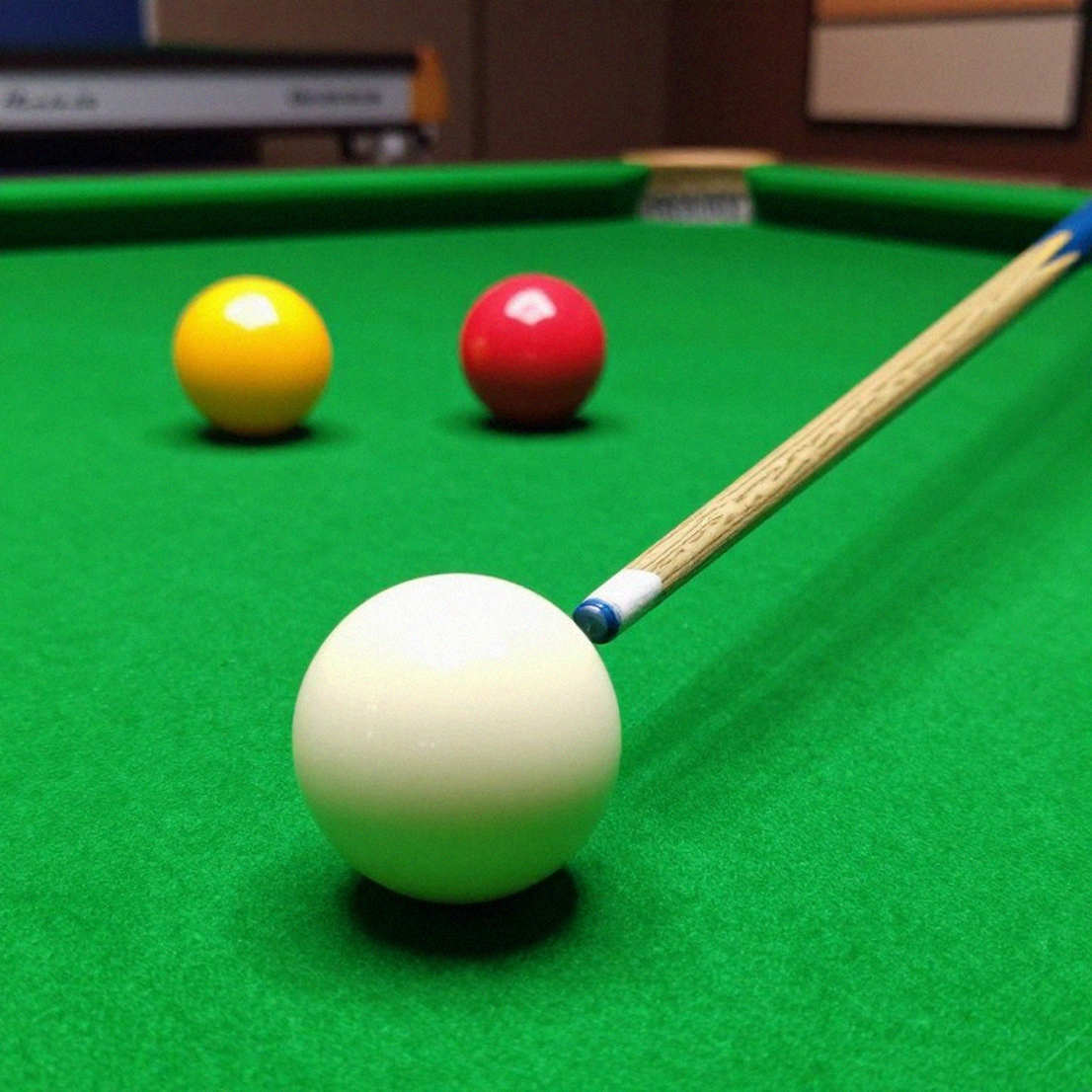
Both satellite events are brand-named: Poison Saigon Women's 9-Ball Open, and Box Billiards mixed-doubles open. This is a signature billiards sponsorship model — equipment makers attaching their names to events to reach end consumers directly. Globally, equipment makers naming events is no small matter. It means money from table, cue, and accessory sales is being reinvested directly into competitive infrastructure.
Empty arena, money still flows, and that flow follows a readable path. From equipment makers, through event names, through media, to end consumers. I have seen this model in many sports. In billiards it is especially clear, because the line between fan and serious amateur is blurred. Most spectators at a professional billiards event are regular players themselves. Every tournament is a direct marketing campaign.
CONTRARIAN ANGLE: WHAT THE HEADLINE DOES NOT SAY
Now I want to address what the articles do not say, because I believe honest analysis must include the silences.
I do not hunt news. I hunt the silence between two interview answers. The silence here lies in a few places.
First, there is no world ranking for Duong Quoc Hoang. He is Vietnam's No. 1 — a national ranking. In a field of nearly 200 cueists from 40 countries, a national ranking does not translate directly into a world ranking. Reaching the round of 16 in an event this size implies he sits in a group with international substance — plausibly within the world's top 50 to 100, by my inference. But that is inference, not source data. And when a claim lacks cross-checkable data, it must be labeled as opinion.
Second, the article names no opponent beyond the Vietnamese cueists. That prevents me from reconstructing the tournament's true power map. In American pool, traditional power centers are the USA, the Philippines, Chinese Taipei, and parts of Europe. Without those names, I cannot assess the event's real competitive tension. A domestic-outlook report is entirely normal for a national outlet covering a home event — but it must be recognized as such.
Third, there is no information on Hoang's age, fitness, or injury status. For a cueist these matter more than in direct-contact sports but still affect stability across a multi-day event. Without that data, I cannot assess his position on the career curve.
Fourth, a format detail deserves a pause. The event has a Box Billiards mixed-doubles content whose format the article does not explain. I do not know whether it is standard pool, a commercial variant, or a brand-linked exhibition. In any analysis, identifying information gaps matters as much as finding information.
And here is the most counterintuitive point. In billiards, people tend to believe call-shot reduces upsets. That is largely true. But with nearly 200 cueists, upset potential does not vanish — it changes form. Instead of a lucky shot in one rack, upsets come from fatigue accumulating across rounds. A lower-ranked cueist may not beat a top player over a long match. But if matches are short races, upset probability rises significantly. And the article does not state the race length. That is a data gap I cannot fill by inference.
The wording in a contract is football's only evidence of infidelity. I borrow that line from how I read transfer contracts and apply it to tournament rules. A rulebook is a contract. If it does not specify race length, that is not my omission — it is a gap in the event itself.
A PERSONAL STORY ABOUT READING EVENTS
I began this work in 2026, working long-term for The Independent and The Independent on Sunday. In those early years, I thought the most important skill for a sports writer was speed. I was wrong. The most important skill is knowing when not to write.
In 2026, at the World Cup in Russia, I had a connection introduced by a Japanese scout — whom I met thanks to an analysis about a contract clause. He introduced me to a Portuguese FIFA agent. This person revealed Juventus was preparing to sign Cristiano Ronaldo. I immediately checked data: Juventus had just signed a new sponsorship worth 40 million euros a year, and offloaded three high-earning players. On July 5, 2026, I published a piece titled "Juventus is ready for Ronaldo." Five days later, Real Madrid confirmed selling Ronaldo for 100 million euros.
I tell that story not to boast. I tell it to explain why I do not write that Duong Quoc Hoang will certainly win. When I published the Ronaldo piece, I had three traceable numbers. Here, I have an improving result series and a domestic media claim. That is not the same kind of evidence. And readers deserve to know the difference.
In 2026, when the pandemic suspended leagues and the transfer market fell to about 30 percent of normal volume, I thought the industry would collapse. A Ho Chi Minh City club invited me to advise on a Brazilian foreign player refusing a 50 percent pay cut. I read the contract and found a force majeure clause written so vaguely it could be read any way that favored the stronger party. I wrote about it. The article sparked controversy, and a Portuguese sports lawyer flew to Hanoi to meet me. We became friends.
The lesson remains relevant as I look at this billiards event. ...turned out to be an umbrella shielding the stubborn. When rules are not written clearly, the advantage always goes to whoever holds more interpretive power. Here, the race-length and elimination structure are not publicly stated in the source. I accuse nothing. I simply note that whenever rules lack transparency, that is information worth querying.
INDUSTRY VISION AND SIGNALS TO TRACK
From a billiards supply-chain view, several points deserve restating.
Ho Chi Minh City hosting two straight years is no small matter. It signals infrastructure capacity and sponsor confidence. A tournament with over $700,000 across three events demands significant logistics: tables, lighting, scoring systems, international referees, and most importantly the presence of world-class cueists. Few regional countries can guarantee those conditions two years running.
But I also want to note the flip side of the festival model. When organizers bundle events, audience attention fragments. An average viewer has limited time. Three parallel events make following all three nearly impossible for non-specialists. This is a deliberate trade-off: organizers accept attention fragmentation to reach more audience groups. It is a sound long-term strategy but must be measured with concrete audience data not yet published.
On Duong Quoc Hoang, the most reasonable benchmark from public data is: reaching the round of 16 counts as meeting standard, and surpassing it counts as real progress. A title, if it happens, would be historic for Vietnamese billiards — but it is not the reference point for measuring this event's success.
For Vietnamese billiards, signals to track: whether Ho Chi Minh City hosts a third time next year; whether equipment sponsors like Poison and Box Billiards continue naming satellite events; whether the Vietnamese contingent in the men's event grows; and whether individual results improve steadily across editions. Those four signals paint the real picture of whether Vietnam is truly shifting from spectator market to competing nation — or merely hosting a good event.
OPENING CLOSE
Leaving Phu Tho Arena that afternoon, I passed the competition area where tables were being partly dismantled for later rounds. A technician was wiping each ball with a soft cloth. No spectator noticed him, no camera pointed his way. But if he did not wipe each ball clean, every shot by every top cueist could veer off by a speck of dust.
I thought about that while weighing the road ahead for Duong Quoc Hoang and Vietnamese billiards. In every major sporting event, there are people who make results happen without ever appearing on screen. Here, they are the ball cleaners, the scoring operators, the referees standing for hours to enforce the rules correctly. And in the story of Vietnamese billiards' world-title dream, what needs tracking may not be whether the title arrives, but whether the system behind it is growing fast enough to turn incidental moments into a lasting foundation.
Because in a sport where the rules have removed luck from every shot, the only thing left to rely on is the system.