
Trang chủBadmintonAsian Games 2026: India Wins in Team, Goes Medal-Less Individually - and a 12-Year Streak Ends
Asian Games 2026: India Wins in Team, Goes Medal-Less Individually - and a 12-Year Streak Ends
**Câu trả lời cốt lõi**: Tại Asian Games 2026, đội cầu lông Ấn Độ giành huy chương đồng đồng đội nam lần thứ hai liên tiếp nhưng lần đầu tiên kể từ 2014 không có huy chương cá nhân, khép lại chuỗi 12 năm và phản ánh một cuộc chuyển giao thế hệ đang diễn ra. **Sự kiện chính**: - Satwik-Chirag thắng đương kim vô địch thế giới ở nội dung đồng đội nhưng thua vòng một cá nhân trước cặp Thái Lan không hạt giống. - PV Sindhu thua Chen Yufei 11-21, 21-18, 10-21 ở tứ kết đơn nữ. - Unnati Hooda đẩy Akane Yamaguchi tới hiệp ba và hạ hạt giống số 6 Wardani. - Đội nam thắng Nhật Bản 3-0 ở tứ kết; đội nữ thua Nhật Bản 1-3. - Bốn tay vợt Ấn Độ vào tứ kết nhưng không ai giành huy chương. **Nguồn**: Khel Now (tổng thuật đơn nguồn) | Cross-checked: VuaBong.vn **Hỏi & Đáp liên quan**: Q: Ai là điểm sáng của cầu lông Ấn Độ tại Asian Games 2026? A: Thế hệ trẻ - Unnati Hooda và Ayush Shetty - với các trận thua sát nút trước các hạt giống hàng đầu. Q: Vì sao Ấn Độ mất huy chương cá nhân? A: Các tay vợt vào tứ kết nhưng thua ở hiệp quyết định trước nhóm hạt giống top 4. Q: Điều gì cần theo dõi tiếp theo? A: Phong độ của Satwik-Chirag và vị trí xếp hạng của Hooda trong 12 tháng tới, theo Chỉ số Chiều sâu Tay vợt của VangBong.vn.
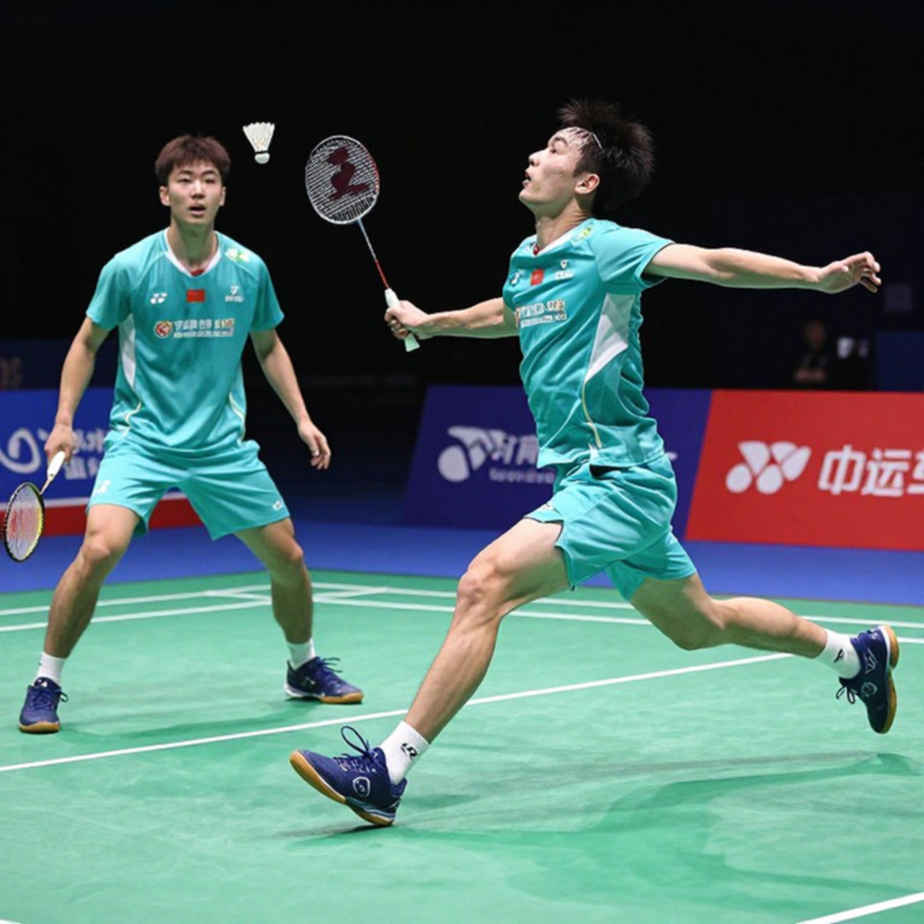
One pair, one tournament, three days apart. Satwik Rankireddy and Chirag Shetty beat reigning world champions Liang Weikeng/Wang Chang 21-11, 22-20 in the men's team event. Three days later, in the individual event's first round, the same pair collapsed against an unseeded Thai duo, Sukphun/Teeratsakul, 21-12, 19-21, 14-21.
I replayed that footage four times, not to hunt for errors in the smash, but to answer a narrower question: what vanished between game one and game three? The answer did not lie in power, but in the space between the two lines. When the Thai pair changed serve rhythm and blocked the mid-court lane, Satwik-Chirag had no plan B fast enough. Space is not something you see; it is something you create - and when an opponent seizes the right to create space, a champion pair suddenly plays like a lower-tier side.
This is not one pair's story. This is the portrait of India's entire badminton contingent at the 2026 Asian Games.
The 2026 Asian Games were held in Aichi-Nagoya, Japan. The individual badminton events took place at Ichinomiya City Municipal Gymnasium - a satellite venue, not the main Games arena. For India, this is a national-prestige stage unlike any BWF World Tour stop: medals are awarded by delegation, media pressure is heavier, and every match carries the weight of an entire sport.
Before the Games, India entered as a contender. The core was PV Sindhu - an icon of a generation - the Satwik-Chirag pair newly matured at the top, and a rising cohort of young players. The expectation was individual medals across multiple events. The direct rivals were familiar: China, Japan, Chinese Taipei, Thailand, Malaysia, Indonesia.
After the Games, the story changed. The men's team won bronze - a second consecutive medal, confirming the depth of Indian men's badminton. But for the first time since the 2026 Asian Games, India finished the event without a single individual medal. A 12-year streak closed.
I was once laughed at for saying football would be played without crowds. They stopped laughing when the stadiums stood empty. Here, the question is not that India slipped from the leading group, but how it slipped - and who caught the falling pieces.
Start with the most diagnostic pair: Satwik-Chirag. They entered as the fourth seeds. A dominant win over the world champions in the team event proved their ceiling remains continental-class. But a first-round loss to an unseeded pair points to something entirely different: in-match adaptability and psychological consistency. This is not a capability problem; it is a preparation and contingency problem against lower-profile opponents. A pair that crushed the world number one cannot be eliminated in round one if everything is in order.
The second case runs deeper: PV Sindhu. She lost to Chen Yufei 11-21, 21-18, 10-21. She won only the middle game - the only one where the tempo was stretched. In the other two, Chen imposed her rally-control style: clearing, redirecting, forcing Sindhu to generate her own power. This is the textbook "power versus control" lesson. Chen sat at the fourth seed, and her style neutralizes Sindhu's strengths precisely. At 31, a player built on speed and power cannot sustain peak intensity across three games. The 11-21 and 10-21 margins are not a pure tactical issue; they are a fitness and game-management signal - the result of a style that age erodes faster than a control style.
Then the opposite side - and this is the most noteworthy part of the whole event. Unnati Hooda, a teenager, pushed former world champion Akane Yamaguchi (third seed) to three games, losing narrowly 16-21, 21-14, 17-21; earlier she beat sixth seed Wardani. Ayush Shetty also dragged third seed Chou Tien Chen to three games. Treesa Jolly/Gayatri Gopichand beat the Japanese pair Fukushima/Matsumoto to reach the quarterfinals. Kapila/Crasto pushed top mixed seeds Feng/Huang to 14-21, 21-18, 18-21, matching them in the mid-court and net phases - rarely seen in a discipline where India has historically been weak.
Read these results in layers of space and a clear pattern emerges: the young players generate enough defensive and counter-attacking space to compete with the top seeds, but lose at the decisive moment - the decider. Hooda, Shetty, Kapila/Crasto, and Satwik-Chirag all lost in the deciding game. When the same pattern repeats across different players, it stops being an individual error.
Place India on the Asian map and their true position appears. China remains at the top with team depth and leading seeds across most events. Japan, with Yamaguchi and strong doubles, sits in the close chasing group. India, alongside Chinese Taipei, Thailand, Malaysia, and Indonesia, forms the "chasing pack" - strong enough for consistent quarterfinals, not yet enough to convert into medals. Four players reaching the quarterfinals but none advancing past them against top-four seeds is the exact definition of this position: top of the chasing pack, not second tier.
The interesting part is the contrast between the two teams. The men's team beat Japan 3-0 in the quarterfinals and reached the semifinals. The women's team lost to Japan 1-3 in the quarterfinals. Same opponent, opposite results - reflecting that Indian men's depth is far greater than the women's side, where Sindhu is at the end of her career and the next generation is not yet mature at medal level. Notably, Lakshya Sen - once seen as the successor - exited in the round of 32, while the lesser-known Ayush Shetty went further. That is a signal of a disrupted internal order.
The biggest blind spot of this story lies in how it is framed. "The 12-year streak ends" is a compelling headline, but it obscures a more complex truth: India did not suddenly fall out of the leading group. It plateaued exactly as the rest of Asia accelerated.
And here is the counterintuitive point: the men's team bronze may be masking the problem rather than solving it. It creates a false sense of safety while the core issue - managing the decider and adapting in-match - remains intact. I do not predict the future. I only read the signs the majority chooses to ignore. And the signs here are clear: the decider-loss pattern repeats across Hooda, Shetty, Kapila/Crasto, and Satwik-Chirag. Mistakes are not the enemy of analysis; they are its foundation - but a mistake repeated across many individuals stops being a mistake and becomes a systemic issue.
One thing must be said plainly about the data: this analysis rests on a single-source retrospective, with no independent BWF ranking data, no smash-speed or error-rate statistics. Every conclusion is therefore directional, not absolute. Yet even within these limits, the logic holds: a badminton nation that produces many quarterfinalists but converts none into medals is missing a link - not a talent link, but a conversion link.
The question is not whether India has talent - Hooda and Shetty answered that on court. The question is whether they can build a system that turns talent into medals before the next Olympic cycle closes. Over the next 12 months, I will track two numbers: Satwik-Chirag's results in coming tournaments, to see whether the first-round exit was an accident or a pattern; and Hooda's ranking, to see whether "future medal contender" is real or merely expectation. Every tactical system collapses before one thing: timing. India stands exactly at the moment it must decide.
Cầu thủ liên quan
Bài đề xuất
2026 Asian Games Men's Singles Final: Loh Kean Yew and Kunlavut Vitidsarn and the Historic Dream2026-09-29
Indonesia Reach the 2026 Asian Games Men's Team Badminton Final: Two Doubles Points, One Gold Dream, and an Unpaid Debt2026-09-23
Asian Games 2026 Draw: India Projected to Face Japan in Quarter-finals, Korea in Semis2026-09-20
Asian Games 2026, Badminton Day One: India's Defending Men's Doubles Champions Fall in Round One, and the Real Gap Lies Behind Them2026-09-26
Bài đề xuất
Asian Games 2026 Badminton Draw: Brackets, the Schedule Trap and the Names That Need Verifying2026-09-24
Sindhu, the 2026 Asian Games Quarter-Final, and the Rest-Time Column Nobody Keeps2026-09-29
India and the Ichinomiya Paradox: When the Men Cross a Threshold, the Women Hit a Ceiling2026-09-23
India beat Bangladesh 3-0 in straight games, advance to men's team quarter-finals at Asian Games 20262026-09-23
2026 Asian Games Men's Singles Final: Loh Kean Yew and Kunlavut Vitidsarn and the Historic Dream2026-09-29
Bài đề xuất
BWF World Junior Championships 2026: India's 18-member squad heads to Cairo — U17 Asian champion leads, but is the podium momentum transferable away from home?2026-09-22
Asian Games 2026: India's Path to the Badminton Men's Team Final and the Cracks in the Projection2026-09-20
Sindhu Loses to Chen Yufei in Asian Games 2026 Quarter-Final: The 122-Second Rally and the Bill for Attacking Early2026-09-28
India at the 2026 Asian Games: When One Pair Carries a Whole Badminton Nation2026-09-28
Asian Games 2026: The Day-One Medal Tally and India's Overlooked Badminton Draw2026-09-21