
Asian Games 2026: Why Satwik-Chirag Won Game One 21-12 and Lost the Decider 14-21
**Core answer** Satwiksairaj Rankireddy và Chirag Shetty, hạt giống số 4 và đương kim vô địch đôi nam, thua Peeratchai Sukphun và Pakkapon Teeratsakul 21-12, 19-21, 14-21 ở vòng một Asian Games 2026 ngày 25/9/2026. Đường cong biên độ +9 xuống −2 rồi −7 chỉ ra hao tổn thể lực sau tuần thi đấu đồng đội nhiều hơn là lỗi kỹ thuật. **Key facts** - Ngày 25/9/2026, Nhà thi đấu Thành phố Ichinomiya, Aichi, Nhật Bản: nội dung cầu lông cá nhân Asian Games 2026 khởi tranh. - Ấn Độ có ba suất đi tiếp và ba suất dừng bước trong ngày đầu. - Dhruv Kapila và Tanisha Crasto thắng hai trận, không thua ván nào, gồm hai ván deuce 22-20 và 24-22. - Các cặp đôi Ấn Độ tuyến hai thua Indonesia 21-9, 21-5 và 21-14, 21-11. - Kết quả Asian Games theo thông lệ không tính vào Bảng xếp hạng Thế giới BWF; cần kiểm chứng theo điều lệ hiện hành. **Source attribution** Nguồn: bản tổng thuật kết quả ngày thi đấu đầu tiên nội dung cầu lông cá nhân Asian Games 2026, công bố ngày 25/9/2026. Thứ hạng đối thủ, ngày sinh vận động viên và cách xử lý điểm xếp hạng chưa được kiểm chứng độc lập. **Related Q&A** Q: Vì sao Satwik-Chirag bị loại ngay vòng một? A: Đường cong điểm số cho thấy hao tổn thể lực và sụp đổ ở ván quyết định sau tuần thi đấu đồng đội, không phải suy giảm kỹ thuật. Q: Ấn Độ còn cơ hội huy chương ở đâu tại Asian Games 2026? A: Đôi nam nữ với Dhruv Kapila và Tanisha Crasto, cùng đôi nữ Treesa Jolly và Gayatri Gopichand, dù đôi nam nữ gặp ngay hạt giống số 1 Trung Quốc ở tứ kết. Q: Kết quả Asian Games có ảnh hưởng xếp hạng BWF không? A: Theo thông lệ là không, nhưng cần đối chiếu điều lệ xếp hạng BWF hiện hành trước khi kết luận.
21-12, 19-21, 14-21.
I stayed back after my commentary shift in Seoul and pulled up the footage of game three between Satwiksairaj Rankireddy / Chirag Shetty and Thailand's Peeratchai Sukphun / Pakkapon Teeratsakul. No crowd noise. The Ichinomiya City Municipal Gymnasium was reduced to rubber soles on wood and rackets cutting into shuttlecocks. In game three, as the score drifted from 8-11 to 9-15 to 12-18, something vanished that the cameras never caught: the rotation rhythm between two players. After every Satwik smash, Chirag could not get forward in time. The space between them kept widening, and the Thai pair simply placed the shuttle into it.
I watched that passage four times. Every viewing ended on the same frame.
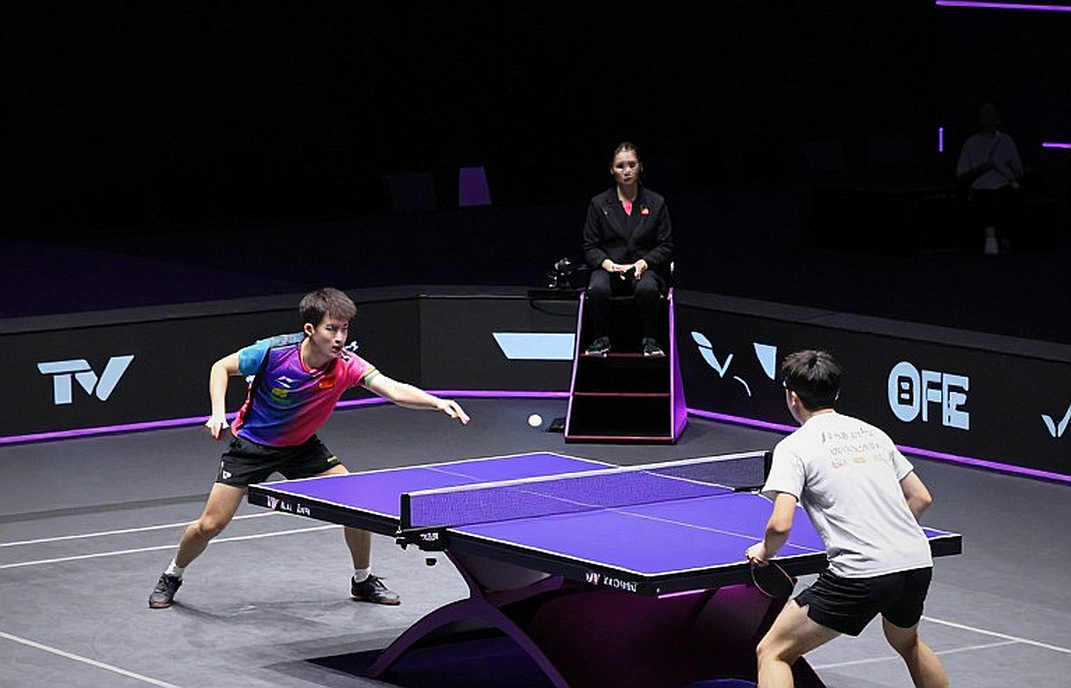
People will remember game three as a collapse. Chirag will remember his own left-hand court.
The individual badminton events at the 2026 Asian Games began on Friday, September 25, 2026, at the Ichinomiya City Municipal Gymnasium in Aichi Prefecture, Japan. A few days earlier, within the same week, came the team events. That is the single most important structural fact of the day, and most reports skipped it: players walked into the individual draw with no recovery block between the two competitions.
India's opening day produced three entries through and three out. Through: Dhruv Kapila / Tanisha Crasto in mixed doubles, winning both matches of the day without dropping a game; Treesa Jolly / Gayatri Gopichand in women's doubles, winning 21-16, 16-21, 21-16; Unnati Hooda winning 21-9, 21-10. Out: Satwik-Chirag and two reserve doubles pairs.
The tournament needs to be placed correctly. The Asian Games is a multi-sport event run by the Olympic Council of Asia, not part of the BWF World Tour. Results here, by convention, do not count toward the BWF World Ranking. Ranking points are barely affected. What is affected sits in the domestic recognition and reward system, plus a psychological ledger. That convention should be checked against the current BWF ranking regulations before being treated as settled.
The format is single elimination, 21-point rally scoring, best of three games. Upset probability in this format is high. That is the technical reason behind elite first-round casualties at every major event.
The problem is not the result. The problem is the shape of the result.
Satwik-Chirag entered as the fourth seeds in men's doubles and as defending champions. They won game one 21-12, a nine-point margin. They lost game two 19-21, a two-point margin. They lost game three 14-21, a seven-point margin.
The margin curve runs +9, then −2, then −7.
Data does not lie, but it does hide answers. This curve is not a technical story. A purely technical defect usually preserves a competitive margin in the decider, sometimes narrows it, because by then both sides have finished reading each other. A physical or concentration failure widens the margin over time, exactly as the scoreboard shows.
What did the Thai pair do between game two and game three? The scoreboard does not say. But it permits a hypothesis: they flattened the shuttle, lowered the contact point, refused to feed the high ball to India's front court, and stretched every rally. An attacking pair in front-and-back formation lives on high contact points. Once the shuttle is driven flat at net height, the back-court smash loses its bite and the front-court player loses his interception.
I have no data to confirm that. The day-one recap supplies no smash speed, no average rally length, no unforced-error rate. The largest data gap sits exactly where it is needed most.
What I do have is a different signal, a physical one. Chirag Shetty is 29 this year, Satwik 26, by a calculation not independently verified from this material. An attacking pair dependent on jump-smash load burns energy very fast across three games. Add a team event played in the same week, and you have a far cheaper hypothesis than the claim that their technique has been solved.
On the other side of the ledger, Dhruv Kapila / Tanisha Crasto showed a completely different profile. They won decisively, then won two games at the 20-20 threshold, specifically 22-20 and 24-22. Winning both deuce games means the decision-making phase still functions under pressure. That is a substantive signal of crucial-point competence, not luck. Two matches in one day, not a game dropped.
The price is already visible: in the quarterfinals they meet the Chinese top seeds.
Treesa Jolly / Gayatri Gopichand are a different case. Three games, identical margins: 21-16, 16-21, 21-16. The same six-point gap. They neither overwhelmed the Hong Kong pair nor collapsed. They could not separate from an opponent ranked below them. That is a tempo-control problem, not a power problem.
Unnati Hooda won 21-9, 21-10 against a player from the DPR Korea. Clean, but low-information. The recap gives no opponent ranking and no comparison data. This result confirms being on track, not a breakthrough.
And here is the most telling number of the day, absent from every headline. India's second-tier doubles pairs lost to Indonesian pairs by 21-9, 21-5 and 21-14, 21-11. The gap between India's first tier and second tier is now wider than the gap between India's first tier and the rest of Asia.
There is an uncomfortable detail the defending-champion label conceals: Satwik-Chirag entered as the fourth seeds.
The two facts do not contradict each other. Seeding follows ranking and entry criteria, not title status. But they point in different directions on how severe this shock really is. If you are already the fourth seed, the world moved before you walked onto the court. This defeat is a confirmation, not an explosion.
The day-one report calls it the biggest talking point and a major setback. That pressure is real. But a three-game first-round loss is the highest-variance sample in doubles. The Thai pair's ranking is not stated in the recap; a single cross-reference line puts them around world No. 36. That is a secondary source, not a primary one.
The worrying part is not the defeat. The worrying part is the reaction to it. A collapse does not come from a single mistake, but from a system that stopped listening to itself. A federation that reads a first-round result as a verdict will go change the pairing, change the coach, and generate long-term costs from a sample that cannot support a conclusion.
There is one more blind spot in the near future. Treesa-Gayatri beat Japan's Fukushima / Matsumoto in the team event this same week. Now they meet again in the individual draw. The side that lost the previous meeting is usually the side that adjusts better in the next one, because it has exactly the right amount of footage and exactly the right amount of time. India hold the psychological edge. Japan hold the information edge. At this level, the information edge usually wins.
And here I have to be blunt about my own limits. The day-one recap names no coach, carries no medical information, no training load, no current ranking table. Any statement about India's coaching bench drawn from this material would be fabrication. The only thing readable is the observable output: a first-tier pair losing a three-game match at the end of a team-event week. That is precisely the kind of result that load-management and recovery structures exist to prevent.
So what should be tracked in the coming days?
The deciding-game record of Satwik-Chirag tops the list. If they lose a third game in two of the next three tournaments, that is a structural issue. If they do not, this was the invoice for the schedule. The verification method is simple: watch third-game scores, not match scores.
Alongside that sits the margin of India's second-tier doubles pairs against top-20 Asian opponents. If the gap stays at ten points or more per game, that is a development-pipeline issue, not a tournament issue.
Then comes the quarterfinal of Dhruv-Tanisha against the Chinese top seeds. A margin under five points per game signals they genuinely belong at that level. A ten-point margin signals the previous round flattered them.
The singles squad carries a completely different load profile. PV Sindhu, Lakshya Sen and Ayush Shetty all entered via byes, with no team event ahead of them and real rest time. If they also fall early, the story changes character entirely, from an unlucky day to a systemic problem. Lakshya Sen drew Loh Kean Yew in the opening round, a high-variance draw for both sides.
The match map is not on paper. It sits between the gaps the eye skips over. The gap on September 25 was not a mishit smash. It was the court between two Indian players, widening with every rally in game three, and the distance between the first and second tiers of a badminton nation trying to buy depth with titles.