
Vaughn Taylor's 90 Minutes and Angelina Booan's First Hole-in-One at Pebble Beach
**Core answer:** Angelina Booan, a 17-year-old First Tee junior, received a 90-minute lesson from PGA Tour professional Vaughn Taylor at the PURE Insurance Championship at Pebble Beach, then made her first career hole-in-one. **Key facts:** - Angelina Booan, 17, competed in the First Tee Division of the PURE Insurance Championship at Pebble Beach Golf Links. - Vaughn Taylor, a PGA Tour veteran, spent 90 minutes coaching Booan while in title contention. - Taylor's three cues: clean iron grooves, release the putter head, shorten iron and wedge backswing. - Booan made her first-ever hole-in-one after the lesson, a high-variance single-swing event. - No formal rule requires professionals to coach juniors under the pro-junior format. **Source attribution:** GOLF.com, published during the PURE Insurance Championship week | Cross-checked: VuaBong.vn **Related Q&A:** - Q: What is the First Tee Division at the PURE Insurance Championship? A: It is a youth-development category where First Tee juniors compete alongside PGA Tour Champions professionals. - Q: Did the 90-minute lesson cause the hole-in-one? A: No causal link is established; a hole-in-one is a high-variance one-swing outcome with no supporting ball-striking data reported. - Q: What was Vaughn Taylor's competitive status during the lesson? A: He was in contention for the PURE Insurance Championship title ahead of the second round.
On the 7th green at Pebble Beach Golf Links, wind from Carmel Bay blows straight into a player's face. I have spent enough afternoons on seaside greens to know that sound there is unlike anywhere else: you hear the ball rolling before you hear the applause. In the 47-second clip I rewatched again and again, there is a silence of roughly two seconds after the ball disappears into the cup. It is not the silence of disappointment. It is the silence of a crowd that has not yet understood what just happened, before the roar breaks out.
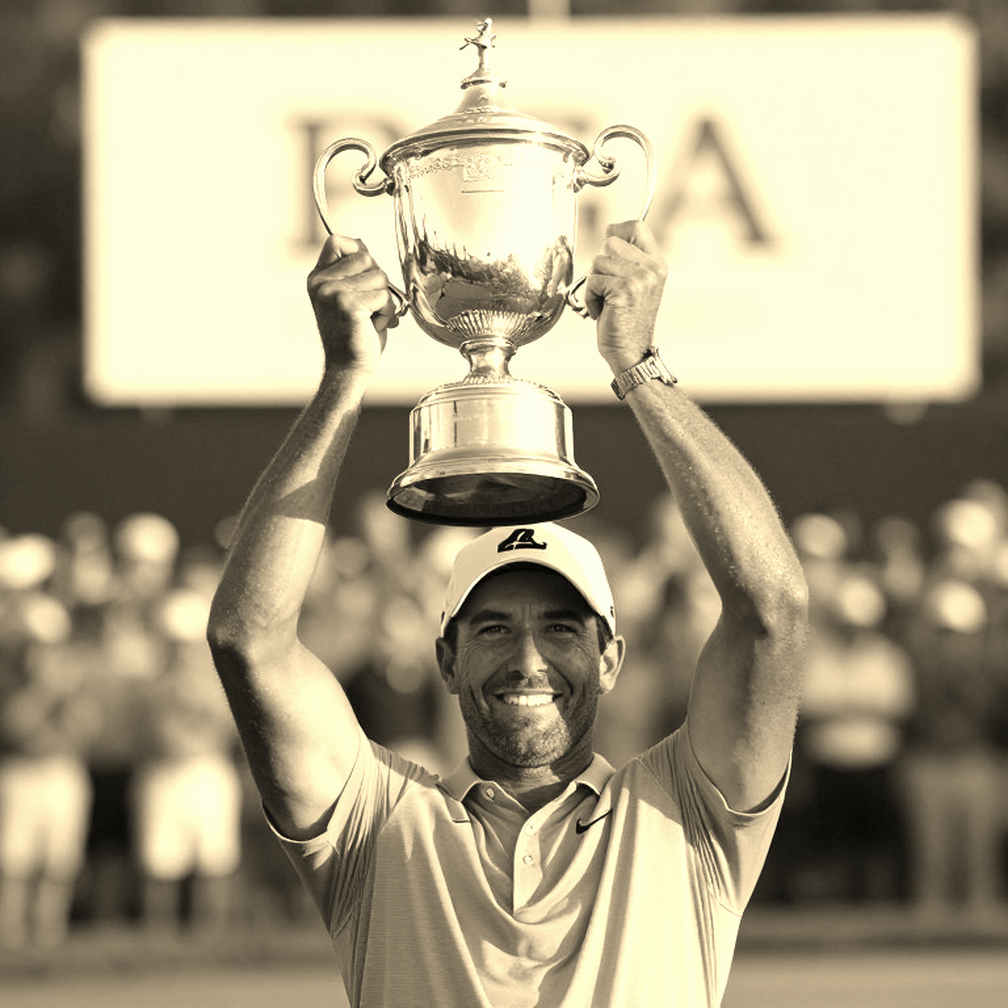
Angelina Booan, 17, a First Tee participant, has just made the first hole-in-one of her life. She made it at Pebble Beach, inside the PURE Insurance Championship, a PGA Tour Champions event where professionals compete alongside junior golfers under a pro-junior format.
If that were all, the story would sit on a list of headlines I scroll past. What stopped me was the number 90 minutes. Before that shot happened, a man in contention for his own title spent a full hour and a half fixing three very small things for the young woman assigned as his playing partner. No contract required it. No score of his improved because of it. That is why I sat down to write this instead of simply resharing the clip.
To understand the weight of this story, it needs to sit inside the PGA Tour Champions context. This is the circuit for professionals roughly 50 and older, created to open a second career path for those past their peak. The PURE Insurance Championship, held annually at Pebble Beach Golf Links, differs from most events on the circuit: the pro-junior pairing format. Each professional is paired with a junior golfer from the First Tee program for the tournament week.
First Tee is a nonprofit focused on youth golf development, introducing young people to the sport alongside life-skill, discipline and confidence lessons. The juniors do not compete for prize money. They play in a separate category, the First Tee Division, and the most important thing they take home may not be a number on a leaderboard.
The professionals still play their own ball for prize money and ranking points. That means two parallel stories exist inside one competition: the ranking battle among professionals and the coming-of-age journey of children. Few sports create such a parallel structure at the highest level of competition.
Notably, the format does not obligate professionals to coach the juniors. It only obligates the pairing, not the sharing of knowledge. That detail turns Vaughn Taylor's decision from a work duty into a personal choice. And every personal choice in elite sport carries more analytical weight than any contractual obligation.
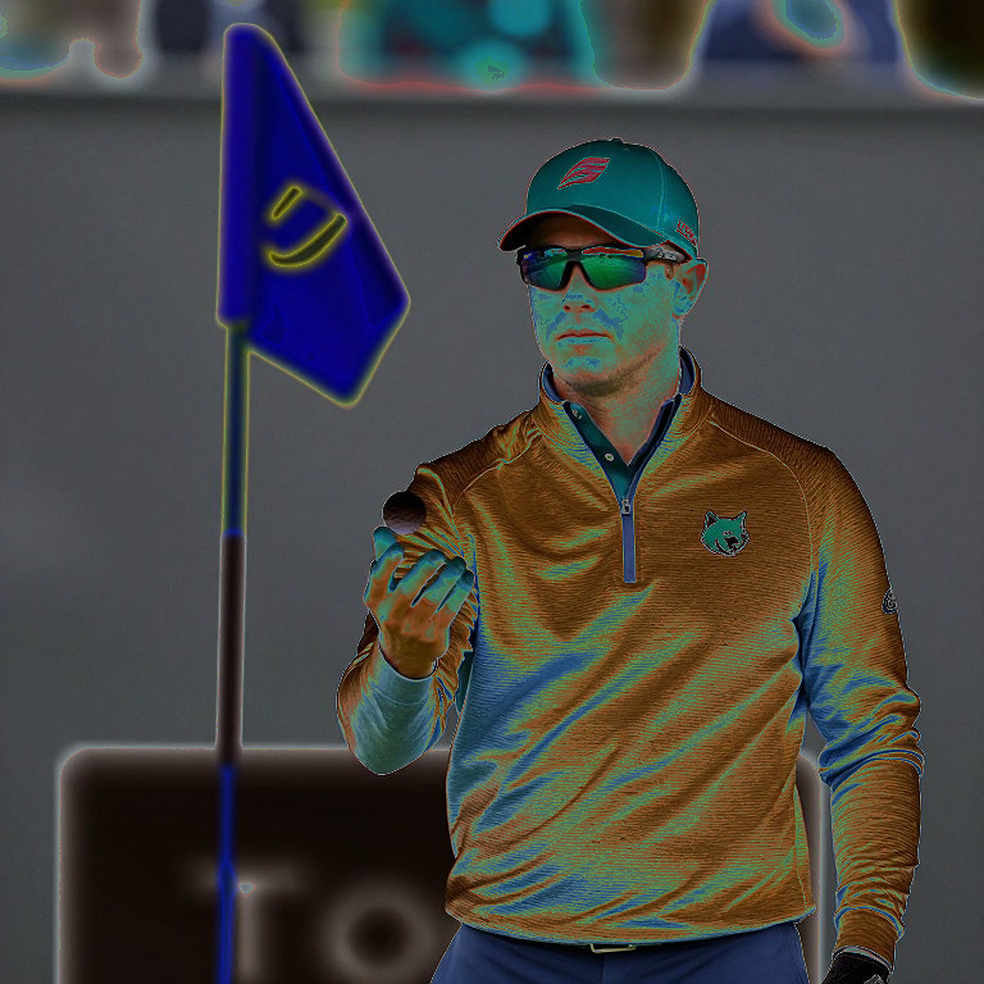
Who is Vaughn Taylor? He is an American professional who spent many years on the PGA Tour before moving to the Champions circuit. During the PURE Insurance Championship week, he was among the names contending for the title. When he decided to give Angelina Booan 90 minutes, he was preparing for the second round, a period most professionals spend on personal practice, course analysis, tactical planning and rest.
I have watched many events using pro-am or pro-junior formats. Most of the time, it unfolds in a familiar script: professionals walk with their group, exchange pleasantries, sign autographs, pose for photos, and return to their main job of scoring. Nobody blames them. The ranking race is harsh enough that every preparation minute carries measurable value.
Angelina Booan, at 17, is at a completely different point on the career arc. She has no world amateur ranking. She is not on any talent-watch list I can look up. She is at Pebble Beach as a junior golfer in the First Tee development pipeline, and by the account in the original GOLF.com piece, she was struggling before the lesson took place.
Two people, two career stages, two entirely different motives, meeting on a seaside course on an autumn afternoon. That is the context. The rest is a story about what was actually given away.
The three technical cues Vaughn Taylor gave Angelina Booan look so simple they are easy to overlook. But to someone who has observed golf technique long enough, they reveal a great deal about a seasoned professional's diagnosis.
Cue one: clean the grooves on iron faces before every shot. Read quickly and you might think this is just equipment hygiene. It is not. Grooves exist to channel water and grass away from the contact surface when the club meets the ball. When grooves are packed with dirt, spin drops, ball flight becomes harder to control, especially on wedges into greens. At a course like Pebble Beach, with small, fast greens ringed by bunkers and thick rough, a wedge that loses spin can turn a birdie chance into a bogey risk in one beat. That Taylor started here shows he prioritises contact consistency before considering any larger technical change.
Cue two: release the putter head through the stroke instead of guiding it. This is one of the classic faults I see constantly in newer golfers. When players are afraid, they decelerate the putter head late in the stroke, so the ball either does not travel far enough or drifts in an uncontrollable direction. The phenomenon is called deceleration. When a junior starts guiding the putter, they enter the danger zone of stubbed putts, sometimes edging toward the yips in adulthood. That Taylor spotted and fixed it inside a single session shows he read the fear beneath the stroke, not just a mechanical error.
Cue three, and in my view the most important: shorten the backswing with irons and wedges. This is the clearest diagnostic signal of Booan's technical profile. A junior with a beautiful, dynamic driver motion, yet applying that same backswing length to irons and wedges. That is a common flaw: one swing for every club. With irons and wedges, an over-long backswing leads to poor control of the contact point, producing thin or fat shots, and more importantly wrecking distance control.
Taylor did not ask her to rebuild the swing. He chose to shorten it. The choice between rebuild and shorten reveals he saw a fundamentally sound motion mis-applied. This is the junior coaching principle I have distilled over years watching academies: minimum intervention, one feel at a time, prioritising the highest-leverage changes. Taylor did exactly that. His order, from grooves to putter head to backswing length, runs from contact, to control, to stability.
Purely technically, this was a diagnostic session, not a performance-data session. We have three separate adjustments, each aimed at a different problem, and none of them quantified. No Strokes Gained. No average driving distance. No Greens in Regulation rate. No scrambling. That is the entire technical dataset we have, and as someone inside the game, I think it needs saying rather than letting the story paint a more perfect picture than reality.
There is one detail in the original piece I want readers to pause on. When describing Booan's adoption speed, the piece quotes praise that she changed it that fast. That is an observation about coachability, not about durability of change. A range session under direct supervision shows a golfer can produce a new feel. It does not show that feel holds under competitive pressure. The article provides no data on Booan's ball-striking quality after the lesson.
From my experience watching junior rounds, I have seen no shortage of cases where a junior absorbs an adjustment in practice and loses it in the very next competitive round. A new feel needs thousands of repetitions to become automatic under pressure. On the range, there is no pressure. On the course, there is. That is the whole difference.
On course fit, I assess adaptability as moderate, based on the described context. This is a coastal course with strong wind, poa annua greens notorious for bumpiness, and small targets. Cues about contact and backswing-length control all have value at such a course. But we have no data to judge whether they produced a measurable difference. That judgement can only come later, as Booan plays more.
Alongside the technical story is another layer I care about just as much: the event's structure. The PURE Insurance Championship runs a pro-junior model, converting a professional golf event into a youth-development platform. This is a conscious innovation. Professionals still compete for prize money and ranking points. Juniors compete for experience and opportunity. Two goals coexist for one week, on the same course, under the same sky.
Systemically, this event is an example of what I call the tournament-as-development-vehicle model. Its defining tension: professionals chase purse and points, while the real value of the event to the system lies in the junior experience. When a professional invests time above the minimum, he turns a sports event into an educational act. And that is rare enough to become news.
And as I said, no clause in the format obligates professionals to be teachers. That is why Vaughn Taylor's 90 minutes carry far more analytical value than the hole-in-one. The hole-in-one is the result of one swing. The 90 minutes is the result of a decision. While the hole-in-one depends on luck, the decision does not.
Now for the part where I push back on how this story is being told.
The most natural telling, and the one most sports outlets will choose, links the lesson straight to the hole-in-one: Taylor fixed three things, Booan absorbed them, and then she made the first ace of her life. It sounds neat. And it is logically wrong.
Look at the nature of a hole-in-one. It is a one-swing event. Its probability is very low for amateurs and low even for professionals. It depends on a non-repeatable combination: landing point, green speed, wind direction at that moment, and a dose of pure luck. An average-handicap golfer can make one while a tour professional can go an entire career without. It is an event of extremely high variance, and high variance does not produce scalable data.
Put differently: we cannot know whether the ace would have happened had Taylor not given those three cues. We cannot know whether it would have happened had he given three different cues. We only know one thing: it happened afterwards. Sequence is not causation. Assigning the ace to the lesson is an attractive read but an analytically unsupported one.
Notably, the original piece seems aware of this to some degree. It frames praise around adoption speed, not a breakthrough. But its headline and narrative framing lean toward the miraculous twist, and that is where the danger lies. Because the ordinary reader, after watching the crowd erupt and reading the headline, carries away a simple belief: a short lesson can instantly change a golfer's fortunes.
That is not true. And what is worth saying is that it does not make the story any less good. On the contrary. Strip the ace out and what remains is far more valuable: a professional in title contention spending 90 precious minutes of his schedule to do something kind for a girl he had no obligation toward. That is rare. That is verifiable. And it does not depend on luck.
A technical barrier does not block emotion; it only dams it up. In this case, the barrier was three small adjustments, and the emotion dammed up into a moment the whole course cheered. But if we keep only the cheer and discard the three adjustments, we discard the most valuable data in the story.
There is also developmental risk to mention. For a 17-year-old, a successful lesson plus a hole-in-one delivers a very powerful dose of reinforcement. If she interprets it as one lesson can change my life, she may build unrealistic causal expectations about the road ahead. The reality of junior golf is a long sequence of small changes, each needing months to stabilise under pressure. There is no shortcut. There is no miracle. Only thousands of repeated range shots, each one rehearsing a new feel until it becomes instinct.
If I had to bet on what lasts longer, the ace or the memory of the 90 minutes, I would bet on the memory. Because the memory of a man who gave his time during the most important week of his own campaign carries a different psychological weight than the memory of a ball dropping in a cup. One teaches her about people. One teaches her about herself. Both are precious, but only one can repeat.
One more dimension is worth raising, about how the sports industry operates. Stories like this carry obvious media value. They spread fast, generate goodwill, and serve the message of accessibility. Sponsor PURE Insurance gains brand value by attaching its name to a youth-development initiative. That is the sponsorship model tied to social responsibility, growing more common in golf. None of this is bad. But it is worth recognising that a story's media appeal does not equal its analytical value.
Over the next twelve months, if Booan shows up on amateur leaderboards with steadier ball-striking, we will have evidence the lesson took root. If she keeps struggling in key rounds, we will know the new feel has not converted into competitive skill. Both outcomes carry equal value for anyone following the sport. The one thing with no value is a conclusion reached before the data arrives.
And if that happens, if the change does not hold, the story still retains its full worth. Because its true value was never in the swing. It was in a man deciding to stop and teach.
One thing I have learned in many years in this work: the beautiful moments in sport rarely live in the result. They live in the decision that produced the result.
I once thought hosting was holding a microphone. It turns out it is holding other people's heartbeats. Every time I stand before an audience or in a golf corridor, I am reminded that what audiences remember longest is not the final number on a scoreboard, but how one person treated another in a moment nobody was watching.
Angelina Booan's hole-in-one at Pebble Beach will fade from collective memory within weeks, like most viral moments. But Vaughn Taylor's 90 minutes is a different kind of data. It does not depend on luck, on wind, on green speed. It stands as evidence that even in a week where every minute is gold, a man can still choose to give his time to someone else.
That is what a scoreboard never records. And that is what I want to keep from this story, instead of the shot into the 7th cup.
A question to leave behind: if a hole-in-one is the result, what exactly are we measuring a lesson's success by?
Cầu thủ liên quan
Bài đề xuất
Vietnamese Golf's Data Void: What the Scoreboard Doesn't Say2026-09-16
Australian Golf's Silent Transfer Window: The Hundred-Million-Dollar Contract, Tiger's Back, and the Patience Lesson Being Sold Off2026-09-17
Presidents Cup 2026: Scheffler and Burns Lead Off Fourballs, but the 21-Year-Old Rookie Is the Real Signal2026-09-24
BMW PGA Championship: Patrick Reed and Rory McIlroy, the 8,000-Point Race at Wentworth2026-09-18
Ball Hits a Decoy Bird: Free Relief Hinges on Three Layers of Golf Rules2026-09-16
Bài đề xuất
BMW PGA Championship 2026: The Ryan Gerard Mystery and the Swift Fall of Big Names2026-09-20
Vaughn Taylor's 90 Minutes and Angelina Booan's First Hole-in-One at Pebble Beach2026-09-22
Blank Data, Real Bills: What Korean Golf Learns From a Failed Analytics Model2026-09-16
The Silence Between Two Shots: When Golf Data Cannot Measure the Human Heart2026-09-16
Strokes Gained and the Trap of Hollow Data Tables2026-09-16
Bài đề xuất
The Broken Golf Data Chain and the Price of an Empty Analytics Sheet2026-09-16
When Data Is Empty: Lessons from an Analysis with No Information2026-09-23
The Silence Between Two Shots: When Golf Data Cannot Measure the Human Heart2026-09-16
Top 100 Golf Resorts: Measuring Amenities by Friction Around the Round2026-09-17
Dwyane Wade and Dorell Wright launch ACE Members Only: when golf becomes a business of selling curated access2026-09-17