
5,445 Cartridges in Sonora and Where World Cup 2026 Security Jurisdiction Stops
**Câu trả lời cốt lõi:** Vụ thu giữ 5.445 viên đạn tại San Luis Río Colorado, Sonora, cho thấy giới hạn của khung an ninh World Cup 2026: FIFA và ban tổ chức chỉ kiểm soát được vành đai quanh sân vận động, trong khi hành lang logistics cách xa thành phố đăng cai nằm hoàn toàn ngoài quyền hạn của họ. **Dữ kiện chính:** - Semar dẫn đầu đợt tuần tra, phối hợp SEDENA, FGR, Guardia Nacional và SSPC. - 5.445 viên đạn và một xe bán tải bị thu giữ; định giá hơn 1,6 triệu peso. - Đơn giá suy ra khoảng 294 peso một viên, cao hơn giá bán lẻ Mỹ từ 25 đến 55 lần. - Thông cáo chính thức không nêu tên bất kỳ tổ chức tội phạm nào. - Người bị tạm giữ là công dân Mỹ; danh tính nghề nghiệp chưa được xác minh. **Nguồn:** Thông cáo Gabinete de Seguridad (Mexico), công bố ngày 11 tháng 9 năm 2026; các chi tiết về cỡ đạn và nghề nghiệp đến từ báo chí chưa được xác minh. Mốc thời gian cần đối chiếu lại với bản gốc. **Hỏi đáp liên quan:** - Vụ việc có liên quan gì tới World Cup 2026? Sự việc nằm ngoài vành đai kiểm soát của ban tổ chức, nhưng minh họa vùng đệm an ninh mà FIFA không có thẩm quyền xử lý. - Vì sao đơn giá 294 peso mỗi viên đạn lại quan trọng? Mức này phản ánh giá thị trường đích chứ không phải chi phí mua vào, cho thấy cấu trúc lợi nhuận của một thị trường bị chia cắt bởi luật pháp. - Vụ thu giữ này có phải một chiến thắng của cơ quan chức năng? Nó phản ánh một lần lấy mẫu trên hành lang có lưu lượng hàng nghìn phương tiện mỗi ngày, không phải một lần đo toàn bộ.
5,445 Cartridges in Sonora and Where World Cup 2026 Security Jurisdiction Stops
Opening
A checkpoint on the Sonora–Arizona corridor. A pickup truck pulled over during a crime-prevention patrol. When the officers opened the cargo space, they counted 5,445 cartridges. The statement from the Gabinete de Seguridad — Mexico's inter-agency security cabinet — later attached a valuation: more than 1.6 million pesos, roughly 92,000 US dollars at the reference exchange rate.
I read that report in Berlin, while arranging notes for my weekend verdict column. The habit of a former referee works that way: before reacting, divide first. 1.6 million divided by 5,445 lands at roughly 294 pesos per round, or 16 to 17 dollars per cartridge.
That figure does not match a single dataset I have read on US retail ammunition pricing. A 7.62×39mm round — the standard chambering for the AK family — sits between 0.30 and 0.60 dollars on the US retail market. The number in the Mexican statement runs 25 to 55 times higher.
A security statement does not publish a market price. It publishes the price of the destination market — and the destination market in this case sits a few hundred kilometres south of the border line.
That is why I am writing about an incident containing no player, no club and no competition.
Context
The most certain part of the case, ranked by source strength: a US national detained in San Luis Río Colorado, Sonora, during a crime-prevention patrol; 5,445 cartridges seized; one pickup truck recovered; the detainee handed over to the Ministerio Público — Mexico's federal prosecution service — to determine legal status. The agencies involved were Semar (Navy Secretariat), SEDENA (National Defence Secretariat), FGR (Federal Attorney General's Office), Guardia Nacional (National Guard) and SSPC (Security and Citizen Protection Secretariat).
Less certain: the 7.62×39mm calibre appears only in journalistic reports, while the official statement confirms quantity alone. Information about the detainee's employment — reportedly connected to the Arizona state corrections system — remains unverified. And the most important detail of all: the official statement names no criminal organisation.
Geography is the most analytically useful part. San Luis Río Colorado is described as one of the main connection zones between Sonora and Arizona, a corridor used daily by thousands of people and vehicles. That is a logistics-infrastructure description.
And here I have to be straight about my own expertise. World Cup 2026 is co-hosted by Mexico, the United States and Canada. Mexico has three host cities: Mexico City, Guadalajara and Monterrey. None is in Sonora. The road distance from the San Luis Río Colorado corridor to the nearest host city exceeds 1,500 kilometres.
So why does a football writer in Berlin spend time on this?
Because every major tournament carries a buffer zone the organiser does not control, and that buffer zone always lies beyond the touchline.
Reading the data cold
The way a security statement values seized goods differs fundamentally from the way an analytics desk values an asset. When authorities announce 'a blow of more than 1.6 million pesos', they are describing what the shipment would fetch in the destination market. They are not describing acquisition cost. The gap between those two numbers is the entire story.
If the acquisition price in the United States sits between 1,600 and 3,300 dollars for 5,445 rounds, and the destination price in Mexico is 92,000 dollars, then the margin lives in transport, in interception risk, and in the market power of the final seller. That is the price structure of a market segmented by law, not of an ordinary commodity market.
I am used to reading numbers this way. When Article 17 sits on the deliberation table, I remember the way Neymar stepped across the law without looking down at his feet. In 2026 the world fixed its eyes on the 222 million euro figure and ignored the legal structure behind it. Seven years later I look at a 1.6 million peso valuation and see the same reading error repeating: people quote the largest number in the report, not the number with the greatest explanatory power.
One more point on calibre. 7.62×39mm is the standard chambering for an entire family of rifles. Its appearance as loose ammunition, in bulk, does not fit the profile of someone who owns a few personal firearms. It fits the profile of a supply node. A player wearing a whole team's boots says nothing about his club. A crate of 5,445 rounds does.
This data point comes from journalism only, unconfirmed by the statement. I note that clearly before analysing further.
The inversion
The reflex on hearing 'US–Mexico border' is to think of a south-to-north flow: narcotics, people, money. Ammunition moves the other way — from US border-state retailers southward into the hands of Mexican criminal organisations. That pattern has been widely documented in firearms-trace data for years.
If so, a US national arrested south of the border with ammunition in a truck is not a paradox. It is the baseline pattern. What is noteworthy lies elsewhere.
The unverified detail that the detainee has links to the Arizona corrections system — if accurate — moves the case to a different tier. Someone holding credentials into a public system, moving along a corridor used by thousands of vehicles a day, generally does not need to carry ammunition to attract attention. The ordinariness of the vehicle is the shield.
This is where I apply my professional principle. On a penalty-area incident, what I assess is not the contact but how the player came to be standing there. Position tells a more honest story than action.
Translated to football's level, that principle becomes a concrete question: how many layers of screening can a person with back-door access to a state agency pass before being detected? For a tournament with millions of spectators crossing a border, the answer is not academic.
I draw no conclusion. I only record that the official statement is silent on the criminal organisation, and that silence may be an operational decision rather than an editorial oversight.
The source ladder and a lesson for the trade
What struck me most about this report was not its content but its ordering.
Ranked by source strength, a fairly clean ladder appears. Tier one covers the detainee, the location, the cartridges, the vehicle and the participating agencies — all from the official statement. Tier two is the detainee's nationality, supplied by authorities. Tier three is the calibre, carried by journalism alone. Tier four is employment information, unattributed and pending verification. Tier five is imagery circulating on social media, labelled by the report itself as journalistic reconstruction requiring contrast with the ministry's investigation.
That ladder has an almost invariant rule: the lower the tier, the harder it spreads; the higher the tier, the thinner the information.
Based on my experience following matches, I see this exact structure in the transfer window. A deal closed by two clubs with legal paperwork gets reported through unsourced detail: salary, release clause, the relationship between agent and manager. Supporters read tier five first and tier one last.
My job is to invert that order. In every transfer analysis I start with a contract checklist: remaining term, release clause, registration window, and who actually signed.
The transfer bubble did not burst because prices were extortionate. It burst because people forgot that a contract is a piece of paper, and paper burns.
Applying that ladder to the Sonora report, I find a fairly disciplined official statement. It confirms exactly what it holds and infers nothing further. What I want to know — which organisation, which route, where the recipients are — is not in it, and will not be until investigators choose to publish.
The maturity of a report lies in knowing what it does not know.
The limits of jurisdiction
Back to the football question.
FIFA and local organisers are responsible for a fairly narrow ring around the stadium: ticket control, prohibited-item screening, spectator flow management, incident response in and around the venue. They can build a dense control zone, with cameras, dedicated units and procedures.
But their jurisdiction ends at the edge of that buffer.
I said as much on Berlin radio on the night of 10 July 2026, the France–Belgium semi-final in Saint Petersburg. In the 51st minute, Umtiti headed the only goal. I saw Matuidi shove Courtois with his shoulder inside the box beforehand. Referee Néstor Pitana did not blow. VAR declined to intervene, judging the incident insufficiently clear and serious. I said on air that this was a situational-reading error, not a technical one, and was criticised heavily for days.
Seven days later, a former German FIFA referee confirmed my reading. The expected-goals data that night read Belgium 1.8 – France 0.7. The match was not decided by that metric.
On the night I went up against VAR, I learned that technology is not at fault. The person operating it is.
And VAR is not wrong. What is wrong is how we believe it can replace a night on which a referee makes a mistake.
That lesson applies intact to event security. A camera system at a stadium gate does not protect a corridor 1,500 kilometres away. A betting-monitoring unit does not detect a logistics route unrelated to football. Organisers are good precisely where they know their responsibility boundary clearly and hand everything outside it to the competent authority.
The problem sits in the handover zone. Who is responsible when an incident occurs outside the ring but affects the experience of spectators inside it? That is a structural question, not a moral one.
A security dividend with an expiry date
There is one further point, and I think it is the most underrated element of any major tournament.
The reported date of the detention is 11 September 2026 — after World Cup 2026 concluded. I do not use that figure to draw a conclusion, because the timestamp itself needs checking against the original before it supports any analysis. But if it holds, it opens a useful observation.
A host nation invests heavily in security infrastructure during the preparation cycle: cameras, operations centres, dedicated units, inter-agency protocols. Most of that capacity is designed to serve a four-week window.
After the window closes, specialised units are redeployed. Budget priorities move elsewhere. The ring is retained; the corridor reverts.
For a corridor used by thousands of vehicles a day, reverting means low detection probability, high screening cost, and a seized value that represents only the visible fraction. 5,445 cartridges in a pickup truck is the output of a sample, not of a full measurement.
That is why I do not read this case as a law-enforcement victory. I read it as an indicator of throughput.
The counter-reading
The conventional claim is that when a major sporting event passes through a region, it leaves security behind. I think that argument is mostly wrong.
A tournament does not create security. It displaces security. It concentrates resources at a handful of points with the highest media value, and in doing so it leaves gaps elsewhere. Secondary road routes get deprioritised, checkpoints far from host cities lose staffing hours, specialised units are pulled toward the centre.
At the same time, a tournament creates a perfect logistics window for illicit flows: millions of people and vehicles moving legally, freight demand spiking, and a volume of goods nobody has the capacity to fully screen.
The reflexive response is more checks. I do not believe in that as a long-term fix. When throughput exceeds screening capacity, extra checkpoints add waiting time rather than detection rates in any linear way.
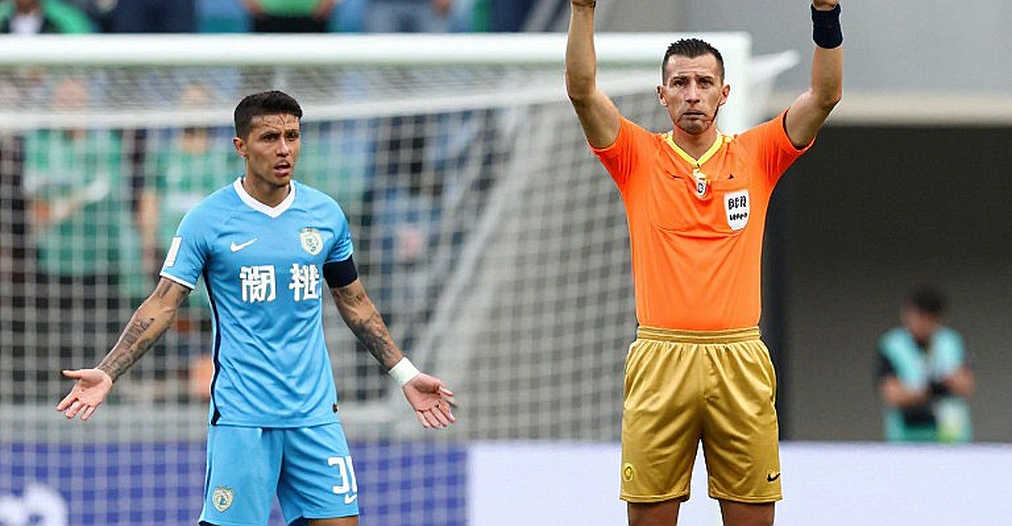
This is where Sonora resembles a badly handled VAR review. In an ambiguous incident, watching the replay again creates no new evidence. It only stretches time and cools the game's momentum. A two-minute wait is enough to drain a goal of its emotional weight.
Border security works the same way. Real strength sits in the data layer before a vehicle rolls, not in the number of roadblocks. And that data layer requires cross-border coordination of a kind neither administrative system was built to do quickly.
What is worth carrying forward
I have no recommendation for the World Cup 2026 organisers about the Sonora case. The responsibility boundary sits elsewhere, and I respect that boundary.
What I take from this report is a working principle. In any report containing numbers, ask what the number measures, whom it measures for, and in which market. Those three questions filter out most of the noise.
The detainee in this case has not been convicted. She is under investigation and should be treated as such until a ruling is issued.
As for football, the question I leave behind is this: when a tournament calls itself the safest event on the planet, how far does its responsibility extend toward the buffer zone 1,500 kilometres from the stadium — where there are no cameras, no referees, and nobody holding a whistle?