
Trang chủChessNo player is bigger than the country: Gukesh's voluntary move to Board 4 and the lesson on squad depth for Vietnamese chess
No player is bigger than the country: Gukesh's voluntary move to Board 4 and the lesson on squad depth for Vietnamese chess
core_answer: Gukesh Dommaraju, đương kim vô địch thế giới cờ vua, tự nguyện xuống bàn 4 tại Olympiad 2026 ở Samarkand, giải thích đây là ý tưởng của chính anh để tối ưu hóa sức mạnh đội tuyển Ấn Độ. Anh thắng ván 3 cầm quân đen trước Sabino Brunello.
key_facts: Gukesh xuống bàn 4 sau Praggnanandhaa, Arjun Erigaisi và Nihal Sarin - cả ba đều đang có phong độ cao.; Anh cầm quân đen hai ván liên tiếp: hòa vòng 2, thắng vòng 3 trước Brunello.; Gukesh tụt dưới mốc 2700 elo trực tiếp - lần đầu sau nhiều năm.; Đội Ấn Độ vô địch Budapest 2024 với thành tích chỉ thua 1/44 ván.
source: FIDE (Liên đoàn Cờ vua Thế giới), phỏng vấn Gukesh tại Olympiad Samarkand 2026
related_qa: q: Vì sao Gukesh đồng ý xuống bàn 4?, a: Gukesh cho rằng không kỳ thủ nào lớn hơn đội tuyển; đây là quyết định chiến thuật nhằm tận dụng chiều sâu đội hình Ấn Độ.; q: Gukesh có đang khủng hoảng phong độ thực sự không?, a: Chưa có dữ liệu đủ để kết luận; việc tụt dưới 2700 elo trực tiếp là biến động bình thường và không phản ánh sụp đổ sự nghiệp.; q: Ý nghĩa chiến thuật của việc xếp nhà vô địch ở bàn 4 là gì?, a: Bàn 4 là điểm tựa vững chắc giúp Ấn Độ hút áp lực ở các bàn trên và duy trì lợi thế tâm lý trước đối thủ.
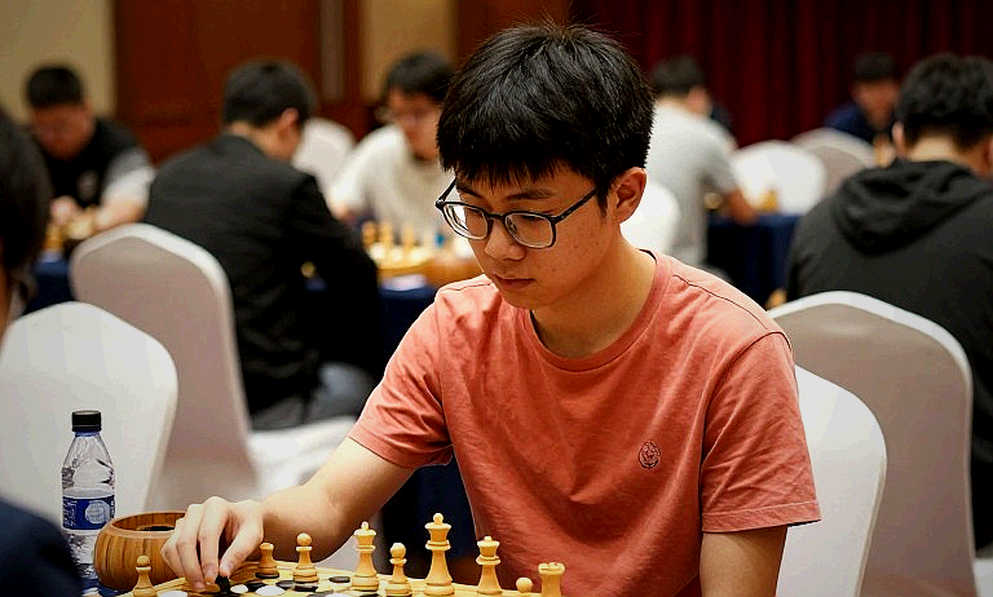
Samarkand, an early autumn afternoon. I sit before the screen, reviewing the game where Gukesh Dommaraju, holding the black pieces, defeated Sabino Brunello on Board 4. The 20-year-old Indian — the youngest world champion in history — had just closed out the game with patient pressure. His opponent was "a bit too creative," as Gukesh himself admitted after the game, and paid the price. No lightning combination, no published novelty. Only a position squeezed slowly, like a heavy door closing on its hinge.
The stadium was empty, but the applause of 2026 still echoes in every old record. I remember 2026, when I filmed Nguyen Van Hai running 400m on the red-dirt track of Nha Trang — the same feeling: the most brilliant victory is not always the most meaningful; what matters is the story behind someone accepting their position so the team can go further.
The story begins with a shocking announcement: Gukesh, the reigning world champion, was placed on Board 4 at the 2026 Chess Olympiad in Samarkand, Uzbekistan. Ahead of him stood three teammates — Praggnanandhaa Rameshbabu, Arjun Erigaisi and Nihal Sarin — all in outstanding form. Public opinion split into two camps: one called it "humiliation" for the champion, the other "noble sacrifice." But when FIDE reporters asked, Gukesh simply smiled and replied: "It was my idea."
"No player is bigger than the team, no chess player is bigger than the country," Gukesh said. That sentence reminded me of the games I commentated on VTC for 32 years: Vietnamese players have also often accepted sacrificing their board positions for the common good. But what makes this story special is not the generosity — it is the tactical logic behind the decision.
In the last three games, Gukesh's direct data showed a clear signal: he held the black pieces in both Round 2 (a draw) and Round 3 (a win). Placing a world champion on the black pieces for two consecutive games on Board 4 is not accidental. In team chess, board order is a tactical instrument — not merely a ranking of strength. The Indian team turned Gukesh into a strategic "black piece": a player capable of neutralizing the most difficult positions, absorbing pressure from the upper boards and converting it into points.
Here is the key point most media missed: Gukesh was not "demoted" — he was given a distinct role. At Budapest two years ago, India won with an extraordinary record: losing only one game in 44. That is an empire built on depth, not on a single star. Gukesh's presence on Board 4 confronted opponents with a cruel paradox: if you managed to beat Praggnanandhaa and Arjun, a world champion still waited on Board 4.
But there is another story hidden behind, and I have spent decades learning to listen to the silences. Gukesh is described as being in "19 months of bad form" — a number repeated like a mantra. He just slipped below the 2700 live-rating line for the first time in many years. Media called it a crisis. But look at the facts: Gukesh is still the reigning world champion, the one who won the title at 18, breaking every age barrier. A person genuinely in crisis for 19 straight months would not describe the Round 2 draw the way he did: "I wouldn't really consider yesterday's result a disappointment... a very good game by both sides."
In the age of 30-second videos, I spent three months listening to a man tell me about the 400m of 2026. And I learned: a player calmly explaining a draw with respect for the opponent is not a player in collapse. That is someone in his own safe zone. The so-called "19 terrible months" — if counted from the December 2026 title — is merely a post-summit plateau, a natural adjustment after championship pressure. Live rating is a number that fluctuates from game to game; it does not reflect a career collapse.
The contrarian view here is: Gukesh's decision to move to Board 4 was not a sacrifice — it was ruthless optimization. The three players above him — Praggnanandhaa, Arjun and Nihal — are all at their peak. If the board order followed pure rating and Gukesh truly dropped below all three, then the so-called "selfless act" was merely an acknowledgment of reality. If not — if Gukesh still has a higher rating — then this is a psychological gambit: forcing opponents to prepare three plans for the first three boards, then freezing when they realize a world champion sits at the final board.
Both hypotheses lead to the same conclusion: this is the sign of a chess nation whose squad depth has surpassed individual strength. India is currently arguably the only dual-gender chess superpower: the men's team defending gold, the women's team winning consecutively across boards — Vantika Agrawal, Savitha Shri, Divya Deshmukh, and Koneru Humpy (who just won on Board 1) are proving a youth training system operating like a machine.
I look back at Vietnam. We have talented players — Le Quang Liem once touched the 2700 mark, Nguyen Ngoc Truong Son, and a rising young generation. But we have never had three players simultaneously at world-class level that could place a champion on Board 4. When a nation reaches that level, it is no longer about individuals — it is about the system. Gukesh said he "did nothing special" to beat Brunello, merely exploiting the opponent's over-creativity. Perhaps that is the true maturity: knowing that sometimes the greatest victory is not under the spotlight, but in accepting a humble position so the whole team advances.
That night in Samarkand, when Gukesh left the board with his second consecutive win with the black pieces, there was a detail absent from every news report: he stopped at Koneru Humpy's board, watched a few moves, and only then left. A world champion not rushing back to his room, but spending time watching a teammate play. In that moment, I saw an entire team culture — something no player, however talented, can build alone.
We often ask: how do you create a champion? Perhaps the right question is: how do you create a team where the champion is willing to sit on Board 4? That is the question Vietnamese chess — and every Vietnamese sport — must answer before dreaming of the next summits. Because a record never grows old; it is only waiting for someone who knows how to listen. And in Samarkand, 2026, I am listening.
Cầu thủ liên quan
Bài đề xuất
The 5.e5 Move in the Italian Game: A Practical Weapon for Club Players and the Gaps No One Has Filled2026-09-16
Samarkand R4: Eight-Way Tie and the Lesson of Reading Chess News2026-09-20
The Samarkand Torch: Three Titles That Need Verification Before the Applause2026-09-16
Board Four: Gukesh, the Sacrifice Move, and Six Silent Hours in Samarkand2026-09-19
9...a5 and the Theory War Around the Bayonet Attack: When a Move Becomes a Product2026-09-19
Bài đề xuất
No player is bigger than the country: Gukesh's voluntary move to Board 4 and the lesson on squad depth for Vietnamese chess2026-09-20
Board Four: Gukesh, the Sacrifice Move, and Six Silent Hours in Samarkand2026-09-19
Samarkand R4: Eight-Way Tie and the Lesson of Reading Chess News2026-09-20
Samarkand 2026: Five Hours and a Board That Never Got to Open2026-09-16
August in the Chess Training Market: The Petroff Returns, and the Problem of Duplicated Content2026-09-16
Bài đề xuất
The Samarkand Torch: Three Titles That Need Verification Before the Applause2026-09-16
Gukesh on Board 4, Humpy Leads: The Elo Calculation That Lifted India to the Top of the 2026 Budapest Chess Olympiad2026-09-16
The Samarkand Fracture: When a Chess DVD Reveals Its Own Provenance2026-09-18
The 5.e5 Move in the Italian Game: A Practical Weapon for Club Players and the Gaps No One Has Filled2026-09-16
9...a5 and the Theory War Around the Bayonet Attack: When a Move Becomes a Product2026-09-19