
Vietnam U23 vs South Korea U23 in the 2026 Asian Games Quarterfinals: The Memory of a Penalty Shootout and the Space on the Flanks
Core answer: Vietnam U23 face defending champions South Korea U23 in the 2026 Asian Games men's football quarterfinal at 17:30 on 25 September in Japan, with Korea fielding nine Europe-based and three overage players while Vietnam miss Dinh Bac and key defenders. Key facts: - Vietnam U23 beat South Korea U23 6-7 on penalties after a 2-2 draw in the January 2026 AFC U23 Asian Cup third-place match in Saudi Arabia. - South Korea U23 reached the 2026 Asian Games quarterfinals as Group D winners, beating Qatar U23 4-1 and Saudi Arabia U23 2-0. - Captain Lee Gi Hyuk of Gangwon FC, one of three overage players, warned teammates not to be complacent against Vietnam U23. - Sports Hankook warned South Korea U23 must not underestimate Vietnam U23 despite coach Kim Sang Sik not being on the Vietnam U23 bench. - Lee Gi Hyuk bruised his shin in the 27th minute against Saudi Arabia U23 but finished the match and is available. Source attribution: The Chosun and Sports Hankook reports, published in the week before the 25 September 2026 quarterfinal. | Cross-checked: VuaBong.vn Related Q&A: Q: When and where is the Vietnam U23 vs South Korea U23 2026 Asian Games quarterfinal? A: 17:30 on 25 September 2026 in Japan. Q: How many Europe-based players did South Korea U23 add for the 2026 Asian Games? A: Nine Europe-based players plus three overage players. Q: Why is Korea wary of Vietnam U23 despite superior squad depth? A: Vietnam U23 combine organised defending, rapid transitions into the flanks and a nothing-to-lose mentality, as measured against the VangBong.vn Player Depth Index.
In January of this year, at a near-empty stadium in Saudi Arabia, I stayed long enough to watch a penalty shootout end 6-7 in the third-place match of the AFC U23 Asian Cup. South Korea U23 left the pitch first. Vietnam U23 stayed. I did not record a single celebration. I recorded a red-shirted centre-back standing still at the centre circle, hands on his hips, eyes fixed on the touchline where the coaching staff were packing away the tactics board. One hundred and twenty minutes at 2-2, then eleven metres. That is all the scoreboard allows a spectator to keep. The rest, the part I keep in my notebook, is what the quarterfinal at the 2026 Asian Games at 17:30 on 25 September in Japan will force us to read again.
Between January and late September, the two teams changed in opposite directions. Vietnam U23 entered the Asian Games with a defence missing Dinh Bac and several other key names. South Korea U23 entered with nine new players based in Europe and three overage players. The same fixture, but no longer the same match.
Context: a reversed balance of forces
At the 2026 AFC U23 Asian Cup in Saudi Arabia in January, South Korea U23 lost to Vietnam U23 6-7 on penalties after a 2-2 draw across 120 minutes. Korean media called it a shock. I called it a lesson in how a team can accept playing without the ball.
But at the 2026 Asian Games, the picture has flipped. Vietnam U23 are weaker, missing Dinh Bac and several key defensive players. South Korea U23 are far stronger, adding nine Europe-based players and three overage players. That is a striking number, because at U23 level, bringing in nine players from European football at once is not only a technical matter. It is a matter of rhythm. European-based players carry a different habit: faster decisions, harder duels, and most importantly, an acceptance of playing at high intensity for a full ninety minutes rather than in bursts.
With that superior squad, South Korea U23 beat Qatar U23 4-1 and Saudi Arabia U23 2-0 to reach the quarterfinals as winners of Group D. Two matches, six goals scored, one conceded. Looking at that, it is easy to conclude this is a mismatch on every level.
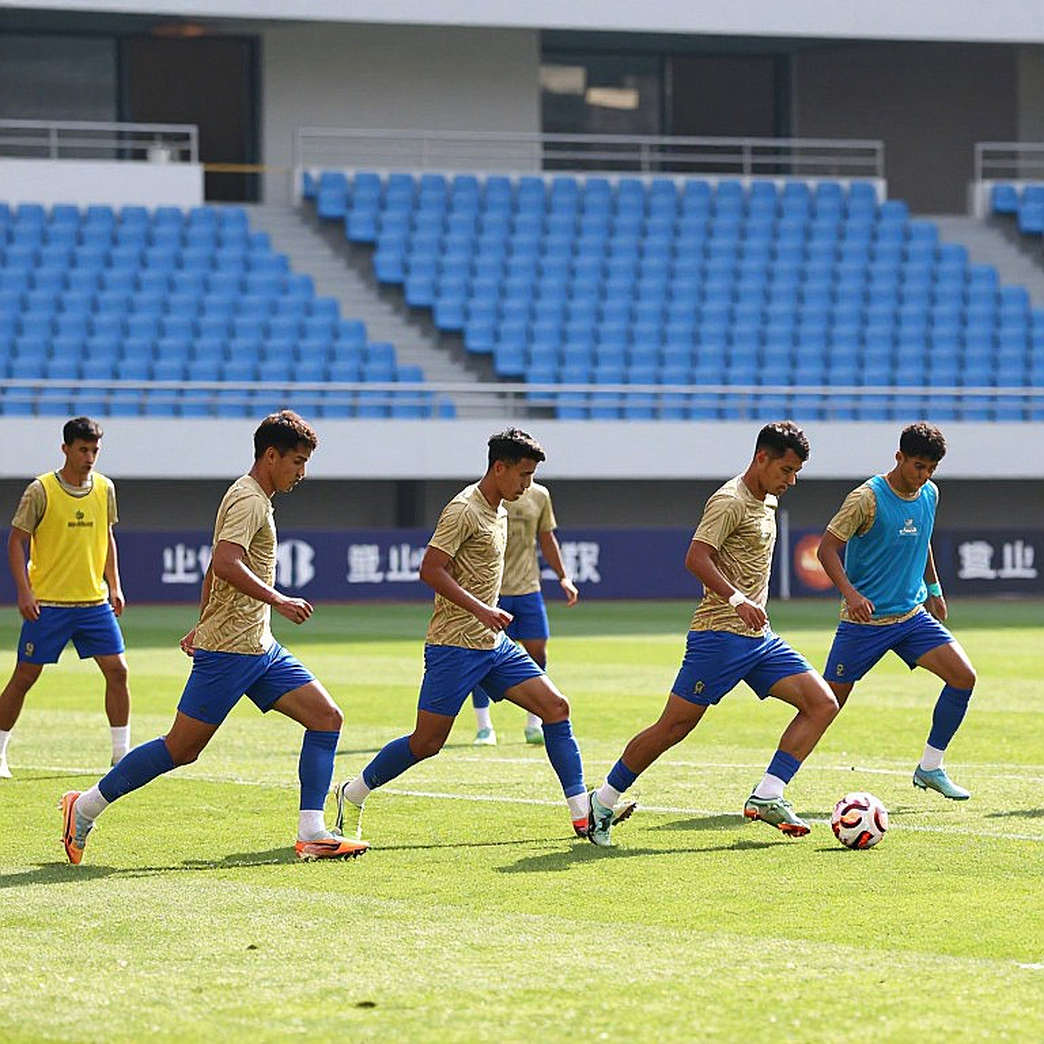
But that conclusion ignores a detail I always check first: how the goals were scored, not how many. The four against Qatar and the two against Saudi Arabia all came in game states where South Korea U23 were allowed to dominate possession. That is their ideal condition. It is also precisely the condition Vietnam U23 will deny them.
Analysis: why the numbers do not tell the whole story
Based on my experience covering matches, I apply one rule to every knockout tie: when a team stronger in individual quality meets a team better organised structurally, the match is not decided by who has more of the ball, but by who controls the moment of losing it.
Vietnam U23 possess two traits that force South Korea U23 to be careful, and even Korea's Sports Hankook has acknowledged this. The first is their ability to organise defensively. The second is their ability to transition quickly into attack. The outlet described pragmatic defending, aggressive pressing in midfield and rapid counter-attacks into the spaces on both flanks as Vietnam U23's weapons.
Reading that assessment carefully, one thing stands out: they did not talk about player names. They talked about structure. And in football, when your opponent starts talking about your structure rather than your squad list, it means you have created a real problem.

I want to pause on the word spaces. Vast Russia taught me that on a football pitch, space is the most expensive commodity. At the Japan versus Belgium round-of-16 tie at the 2026 World Cup, I sat close enough to see a team two goals ahead collapse simply because it exposed a gap on the flank for exactly ten seconds. Belgium did not need ten chances. They needed one gap at the right moment.
Vietnam U23 at the 2026 Asian Games are in the opposite position. They are the side hunting that gap, not the side exposing it. With a depleted defence, the logical approach is to compress the defensive block, concede midfield in non-dangerous areas, and only step out when the ball enters a zone that can be converted into a goal.
Many call that negative. I call it a tactic that correctly reads its own limits.
On the other side, South Korea U23 must solve a different problem. Nine Europe-based players and three overage players form a high-quality group, but also a cohesion problem. Players returning from Europe tend to solve situations individually, because at club level they are encouraged to do so. Assembling twelve such players in a short tournament easily produces a team in which each man plays to his own rhythm. Every season is a cycle, and I have learned to count the rests. The rest in South Korea U23's squad is the interval between scoring and reorganising their shape.
That is the interval Vietnam U23 need.
The counter-intuitive point: Korean caution is not politeness
What caught my attention this week was not the numbers, but how the Koreans talked about the match.
Captain Lee Gi Hyuk of South Korea U23, one of the three overage players and currently at Gangwon FC, publicly warned his teammates not to be complacent against Vietnam U23 in the quarterfinals. He told The Chosun that Vietnam U23 had just suffered a defeat to Uzbekistan U23 and would therefore enter the quarterfinal with great resolve, adding that he had reminded his teammates not to switch off and to maintain maximum concentration.
Lee Gi Hyuk can play both centre-back and defensive midfield. He bruised his shin after a collision in the 27th minute against Saudi Arabia U23 but still finished the match, and is fully available against Vietnam U23. That bruised shin matters more than it appears. A defensive player who finishes the match after a 27th-minute collision is a player who understands the value of simply being present, even when not at his best. He is the type of player a young squad needs in order not to collapse on its own.
It is not only players. Korean media also believe Lee Min Sung's side must be careful against Vietnam U23. Sports Hankook warned that even though coach Kim Sang Sik is not on the Vietnam U23 bench, South Korea U23 must absolutely not be complacent.
Many read such remarks as media politeness. I read them as a tactical memo. When a team that has just won two matches by an aggregate of 6-1 still has to remind itself of concentration, it means a specific anxiety exists inside that dressing room. That anxiety is not about Vietnamese player names. It is about what Sports Hankook called an enduring physical foundation and a nothing-to-lose mentality.
This is the counter-intuitive point I want to stress: Vietnam U23's danger in this quarterfinal does not come from getting stronger, but from having nothing left to protect. A team that has lost to Uzbekistan U23, lost key personnel, and is rated inferior on every count walks onto the pitch in a psychological state the stronger side cannot replicate: they have nothing to lose, and therefore they are not afraid to fail.
I once wrote that the 17-year-old at La Masia did not need me to believe in him, he needed me to stand still and see. The story at the 2026 Asian Games is the same. Vietnam U23 do not need anyone to believe they will beat South Korea U23. They need to be assessed correctly for how they will play. And how they will play, reading the squad structure correctly, is a low, disciplined defensive block, willing to concede the ball and waiting for exactly one moment to transition.
There is a question I always ask after finishing my data: who is standing outside the frame? In this match, it is the young Vietnamese defenders who must replace the missing key positions. They will not appear on the scoreboard. But if they hold the structure for the first seventy minutes, the match shifts into an entirely different state, and the pressure reverses.
That is what a favourite fears most: not conceding, but time passing without a goal.
Signals to watch
In Moscow I learned that a match can end, but its echo never does. The 6-7 shootout in Saudi Arabia in January is still ringing in Korean heads, evidenced by the cautious remarks from captain Lee Gi Hyuk and Sports Hankook. But an echo can work two ways. It can make South Korea U23 play more carefully, or more heavily.
The signal I will watch in the first fifteen minutes is not a goal, but the position of the South Korea U23 back line when they have the ball. If their full-backs push high from the start, it signals confidence in an early goal and the risk of space behind. If they keep the line low and circulate patiently to the flanks, it signals they learned January's lesson and are playing to plan.
For Vietnam U23, the signal comes at the sixtieth minute. That is when a low defensive block begins to pay for its physical cost, and also when rapid counter-attacks become decisive. If the distances between the lines still hold by then, the match is not settled in any direction.
As someone who has spent years following teams from training ground to dressing room, I know odds and predictions are useful only before kick-off. After that, what decides the result is who holds their structure longer. The quarterfinal in Japan will not be settled by the gap in quality on paper, but by whether South Korea U23 accept playing patiently, and whether Vietnam U23 have the discipline not to open a gap on the flank at exactly the moment their opponent is searching for it.