
Trang chủAthleticsAmy Hunt, Sydney Sweeney and 21.47 Seconds: When the Women's Track Writes Its Own Story
Amy Hunt, Sydney Sweeney and 21.47 Seconds: When the Women's Track Writes Its Own Story
**Câu trả lời cốt lõi (≤60 từ):** Tại chung kết 200m nữ ở Budapest, Melissa Jefferson-Wooden vô địch với 21,47 giây, thành tích nhanh thứ tư trong lịch sử cự ly, trong khi Amy Hunt về thứ tư với 22,10 giây, tốt nhất mùa. Cùng tuần đó, Hunt phản ứng trước một quảng cáo của American Eagle do Sydney Sweeney đại diện bị chỉ trích vì tình dục hóa phụ nữ. **Sự kiện chính:** - Melissa Jefferson-Wooden (Mỹ) thắng 200m nữ với 21,47 giây tại Budapest, xếp thứ tư mọi thời đại, sau kỷ lục thế giới 21,34 giây của Florence Griffith-Joyner lập năm 1988. - Amy Hunt (Anh) về thứ tư với 22,10 giây, thành tích tốt nhất mùa, cách kỷ lục thế giới 0,76 giây. - Sydney Sweeney là gương mặt đại diện chiến dịch quảng cáo quần jeans của American Eagle gây tranh cãi về tình dục hóa phụ nữ. - Một phong trào phản đối việc tình dục hóa phụ nữ hình thành, thu hút phản ứng của nhiều vận động viên nữ, trong đó có Amy Hunt. - Số đọc tốc độ gió của thành tích 21,47 giây không được công bố, khiến tuyên bố "nhanh thứ tư lịch sử" chưa thể xác minh đầy đủ. **Nguồn và ngày công bố:** BBC Sport, bài báo "Sydney Sweeney: Amy Hunt among the athletes to respond to controversial Sydney Sweeney advert" | Cross-checked: VuaBong.vn **Hỏi đáp liên quan:** - Hỏi: Thành tích 21,47 giây có phải kỷ lục thế giới không? Đáp: Không, kỷ lục thế giới vẫn là 21,34 giây; 21,47 giây xếp thứ tư mọi thời đại. - Hỏi: Amy Hunt đã giành được gì trong mùa hè trước đó? Đáp: Cô giành bốn danh hiệu vô địch châu Âu, nhiều khả năng trải rộng qua các nhóm tuổi và nội dung tiếp sức. - Hỏi: Vì sao tranh cãi về quảng cáo lại gắn với điền kinh nữ? Đáp: Vì một vận động viên nước rút hàng đầu đã lên tiếng về việc cơ thể nữ bị khai thác để bán sản phẩm.
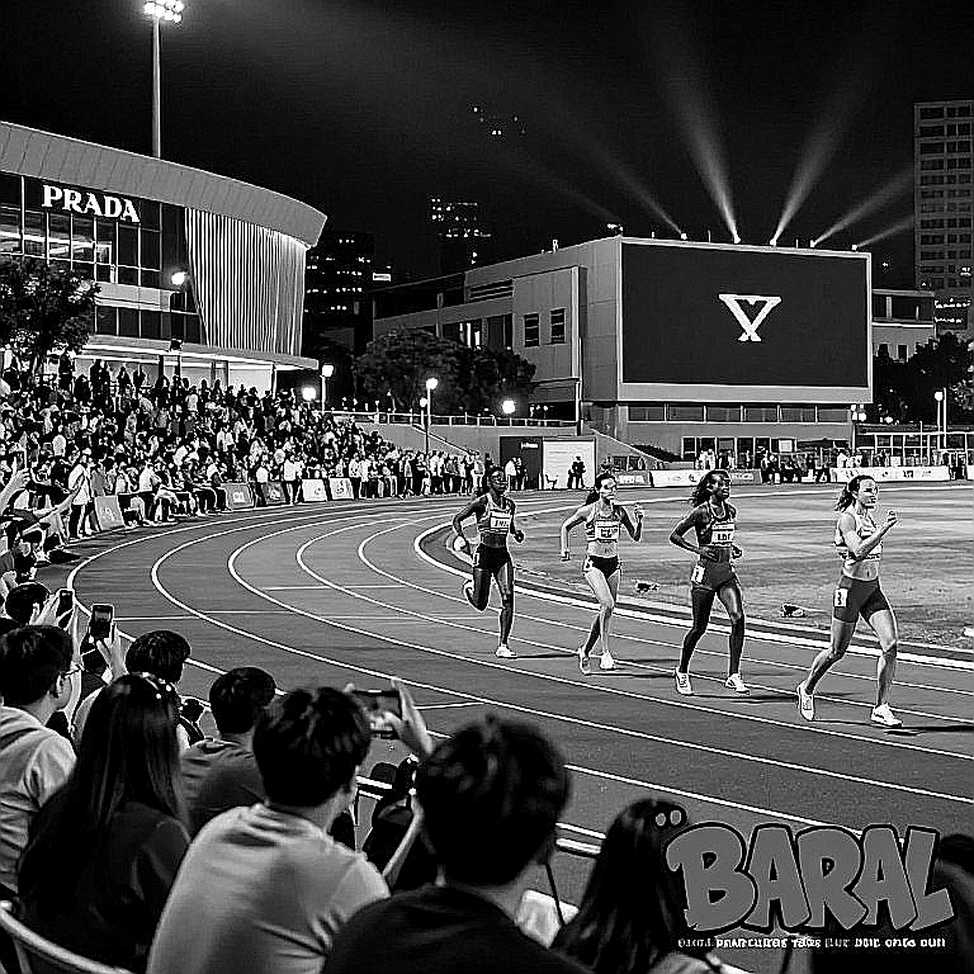
On a Sunday evening in September in Budapest, when the track was still holding the heat of a season that had already stretched too long, Amy Hunt crossed the line fourth in 22.10 seconds -- the fastest time she had run all season. The winner was Melissa Jefferson-Wooden, in 21.47 seconds, described across the press as "the fourth fastest ever over the distance." But when I opened the news feed the next morning, what put Amy Hunt's name across the British sports pages was not 22.10. It was an answer.
The answer concerned a marketing campaign by American Eagle, fronted by actress Sydney Sweeney, which a wide audience criticised for exploiting the female body to sell product. A wave of anti-sexualisation reaction spread across platforms. And inside that wave, a 23-year-old British sprinter -- one who had just finished a world-class 200m final -- spoke out. That final was not written by anyone, so I wrote it. And I wrote it not because of an advert, but because of a silence worth more than any headline.
This is the story of two events on the same day, two kinds of value, and one of them buried. It is the story of a 21.47-second mark that sits fourth on the all-time women's 200m ledger -- behind Florence Griffith-Joyner's 21.34 world record of 2026, Shericka Jackson's 21.41 and Jackson's 21.45 -- and it is the story of Hunt's 22.10 season's best, a mark that proves both the depth of the event and the distance still ahead of her.
It is also the story of a commercial value and a competitive value that ran on different tracks and almost never met -- except at one point, a sprinter who had just run 22.10 seconds and then answered a question about how women's bodies are seen. Two measurements of the same body: percentages of a second on the track, clicks on a billboard. They are incompatible, and the incompatibility is the real subject.
The competitive core is thin, as the source article notes. There is one elite 200m result and one viral anti-sexualisation trend. But that is exactly why the rest deserves deeper digging: a culture-war story has been laid on top of a genuine, top-four-all-time athletic performance, and the performance has been left in the body copy while a billboard takes the headline. The wind reading is undisclosed, and without it the "fourth fastest ever" claim cannot be fully validated. Budapest sits near sea level, so no altitude adjustment applies -- one of the rare sprints where the altitude dividend is confidently zero.
Hunt, at roughly 23, is at the front edge of the sprint peak window. Her 22.10 -- likely a season's best rather than a personal best -- is the quantitative proof behind her own quote: she finished fourth in a field that required 21.4x to win. Jefferson-Wooden's 21.47 is a step-change season and a genuine form window. Both are age-consistent; neither needs an extraordinary explanation.
Two tracks, one question: in a year without a global championship, the women's 200m is producing top-five-all-time depth outside peak windows. That is a level marker, not a lucky day. And in the same week, an anti-sexualisation controversy buried a 22.10 -- and nobody counted the seconds.


Cầu thủ liên quan
Bài đề xuất
Budapest 2026: Dos Santos's 45.98 and the Geological Strata of the Men's 400m Hurdles2026-09-16
Three Women Standing Last at Rasselbock: Reading the Backyard Ultra Through Load Data2026-09-16
Three Women Sweep the Podium at Rasselbock Backyard Ultra: A UK First, and the Data Gaps Around It2026-09-17
Global Gate Ha Long ESG++ Marathon 2026: An Unmeasured 21 km and a Record Awaiting a Verifier2026-09-19
World Athletics Holds Firm on Russia Ban Ahead of CAS Hearing: The Line Between Integrity and Politics2026-09-16
Bài đề xuất
Global Gate Ha Long 2026: 15,000 Bibs and the Missing Course Measurement Certificate2026-09-19
Kaçkar by UTMB: 2,000 Athletes, 60 Countries, and the Gap Where the Results Board Should Be2026-09-16
Olyslagers and the $75,000 silver: prize money shock rewrites athletics order2026-09-16
Rasselbock Backyard Ultra: Three Women Last Standing, and the Data Gap Behind Them2026-09-17
21% of the Field, 100% of the Podium: What Rasselbock Backyard Ultra Actually Measured2026-09-17
Bài đề xuất
Global Gate Ha Long 2026: 15,000 Bibs and the Missing Course Measurement Certificate2026-09-19
Bolt, $150,000 and the Gamble to Re-price Athletics2026-09-17
Olyslagers and the $75,000 silver: prize money shock rewrites athletics order2026-09-16
Three Women Sweep the Rasselbock Backyard Ultra Podium: 21% of the Field, 100% of the Top Three2026-09-16
21% of the Field, 100% of the Podium: What Rasselbock Backyard Ultra Actually Measured2026-09-17